

Imagine a world where industries thrive, yet the air remains clean. Sounds like a fantasy?
Not with Carbon Capture, Utilization, and Storage (CCUS). This revolutionary methodology offers a powerful solution to the climate crisis, allowing us to continue utilizing essential industries while minimizing their environmental footprint.India, the third-largest emitter of CO2 globally, faces significant challenges in reducing its carbon footprint. Despite progress in renewable energy, which contributes to about 30% of the necessary decarbonization, emissions from key sectors such as power generation and heavy industry remain difficult to address. With rapid economic growth and a population set to surpass 1.5 billion by 2036, India’s CO2 emissions are projected to exceed 4 gigatonnes annually by 2030.(Source: NITI Aayog)
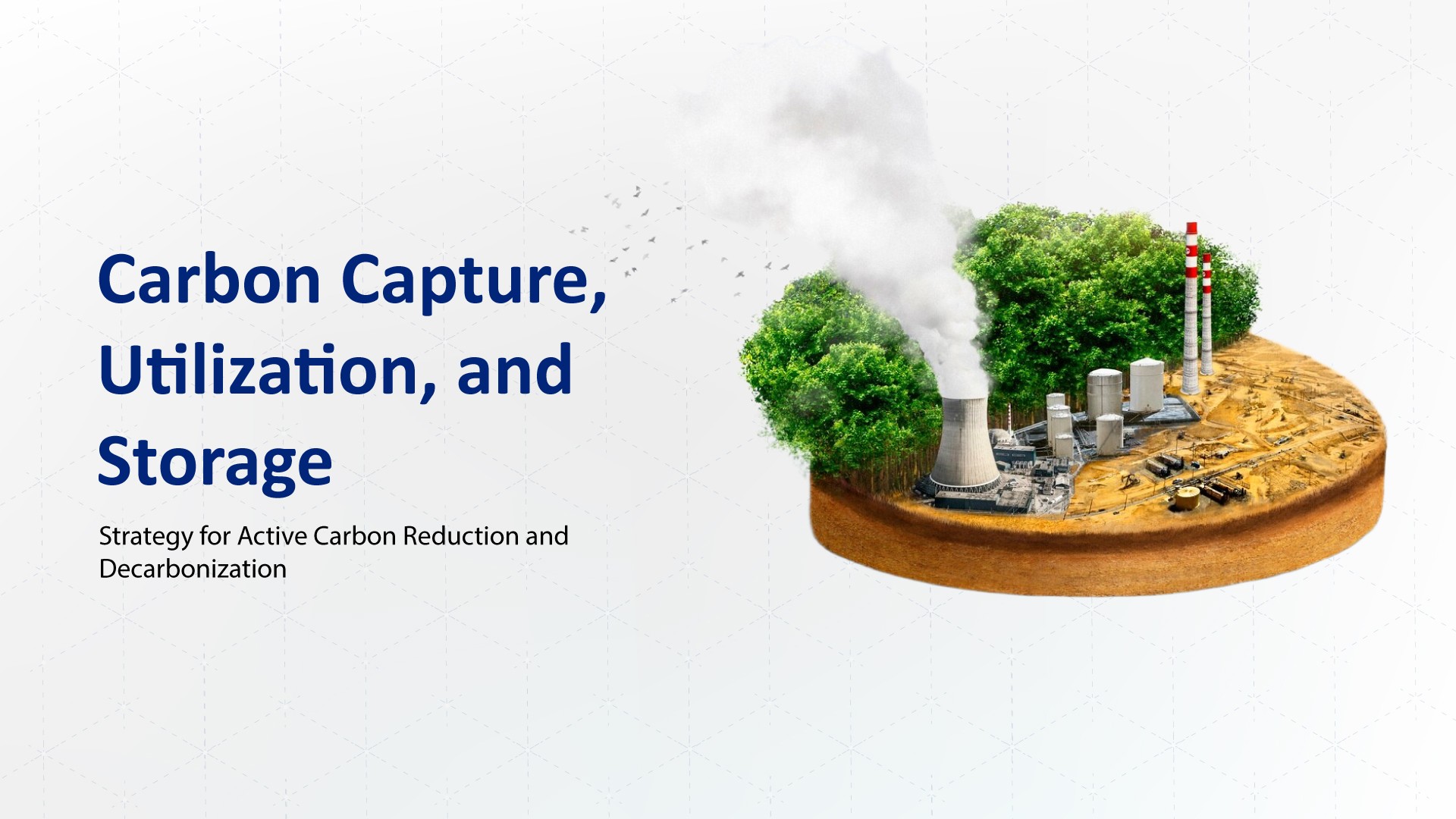
Carbon Capture, Utilization, and Storage (CCUS) emerges as a key concept in this context. CCUS involves capturing CO2 from large industrial sources, transporting it, and either storing it underground or utilizing it for other purposes.
This method is crucial for India to achieve its ambitious net-zero emissions target by 2070, as highlighted by the International Energy Agency (IEA) and the Intergovernmental Panel on Climate Change (IPCC).
Decarbonization Through CCUS
Carbon Capture, Utilization, and Storage (CCUS) plays a vital role in reducing emissions and transitioning to cleaner energy systems. Here's how:
Decarbonizing Hard-to-Abate Sectors
Industries like steel, cement, oil and gas, petrochemicals, and fertilizers are essential for India's growth but emit significant CO2. Since these sectors heavily rely on fossil fuels, CCUS is crucial to reduce their emissions while maintaining energy and material security.Boosting the Hydrogen Economy
Green hydrogen is expensive at $5–6/kg. CCUS can enable cost-effective blue hydrogen production at $2/kg using coal gasification, helping India transition to a hydrogen-based economy.(Source: NITI Aayog)Removing Atmospheric CO2
To achieve net-zero emissions and limit global warming, removing excess CO2 from the atmosphere is critical. Direct Air Capture (DAC) technology, though currently costly, could become a key solution with innovation and supportive policies.Sustaining Existing Emitters
India’s coal power plants and steel facilities are relatively young, with years of operational life ahead. Retrofitting them with CCUS can prevent asset stranding and avoid economic losses, estimated at $6 billion annually by 2050.(Source: NITI Aayog)
The 3 Faces of Carbon: Understanding Emission Types
The total CO2 emissions from a system can be categorized into three types
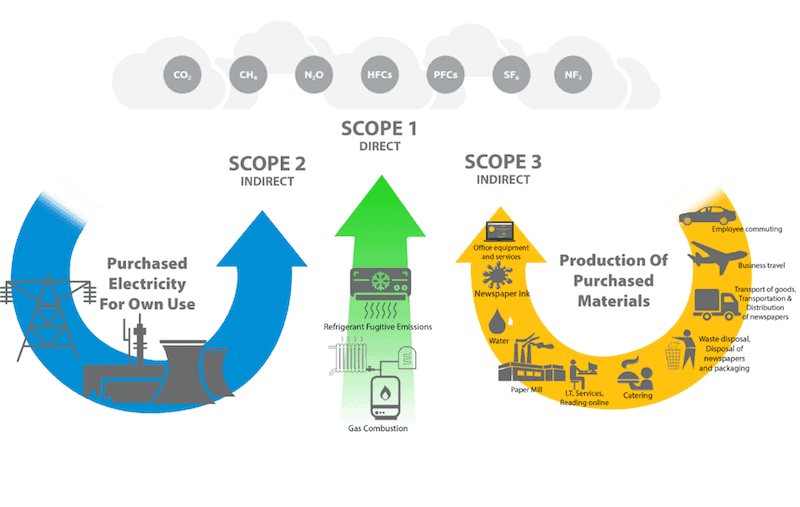
This study focuses on Scope 1 emissions, which originate from fuel combustion within the plant boundaries of power plants and key industrial sectors. These sectors, responsible for approximately 60% of India's total CO2 emissions (around 1,600 Mtpa in 2020), are crucial targets for CCUS deployment. Projected growth in these sectors will further increase emissions to nearly 2,300 Mtpa by 2030, emphasizing the urgency of implementing CCUS solutions. (Source: NITI Aayog)
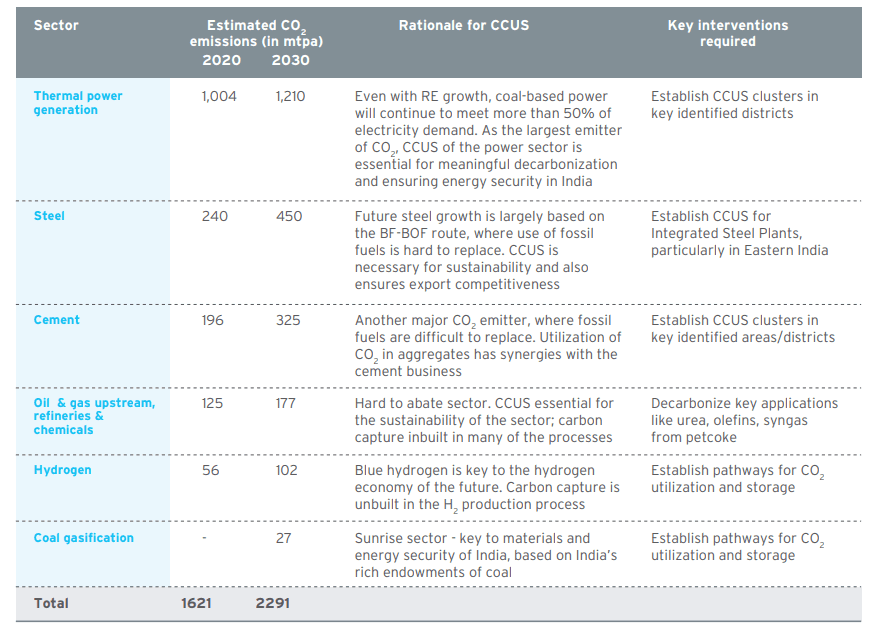
Sector-wise CO2 Emissions and Interventions Required
The table outlines key sectors in India that contribute significantly to CO₂ emissions, including thermal power, steel, cement, oil & gas, hydrogen production, and coal gasification. Each sector presents unique challenges in reducing emissions due to its dependence on fossil fuels for energy and production processes. To tackle this, specific CCUS interventions are recommended, such as developing CCUS clusters, decarbonizing industrial operations, and establishing pathways for CO₂ utilization and storage. These targeted measures are vital for achieving substantial decarbonization while supporting industrial growth, energy security, and global competitiveness.
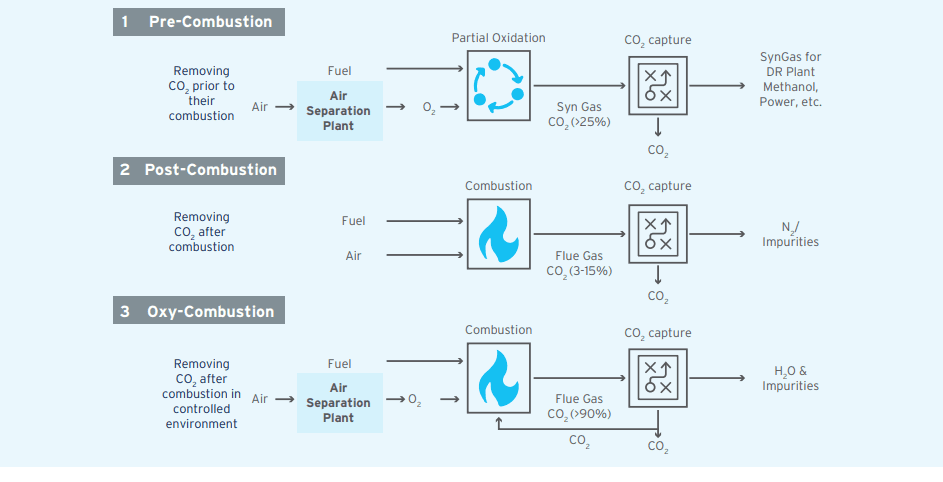
Carbon Capture Technologies
CO2 capture technologies separate carbon dioxide from gas streams that are released from industrial processes such as power plants, chemical production, cement production or steel making. There are three different broad categories of technologies for capturing CO2 : post-combustion capture, pre-combustion and oxy-fuel combustion.
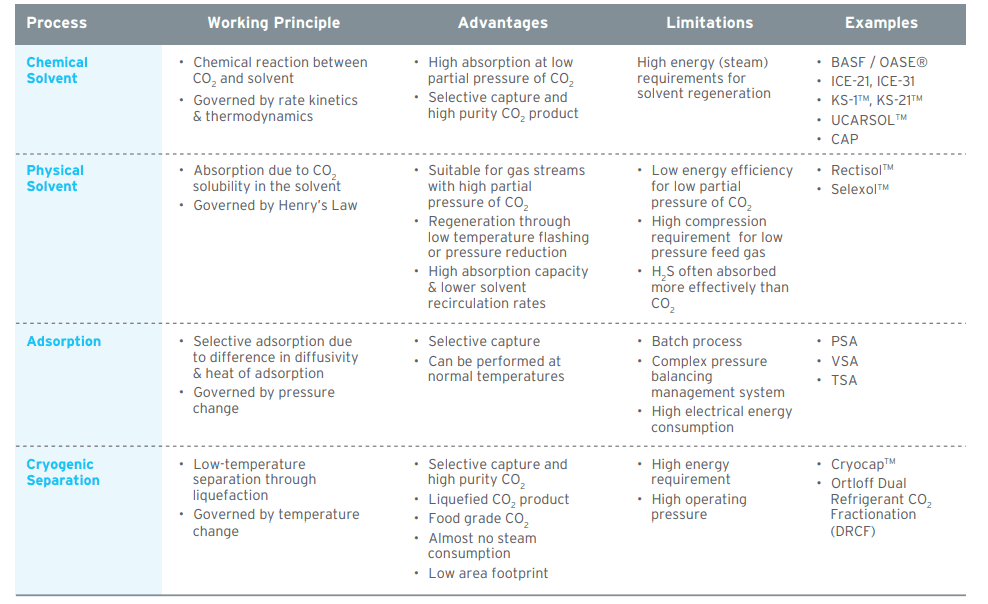
Mature and Commercially Proven CO2 Capture Technologies
Direct Air Capture
DAC captures CO2 directly from the air, even at low concentrations (~415 ppm). Unlike conventional methods tied to specific sources, DAC works anywhere, making it versatile. However, the current cost ($400–800/ton) and scalability are challenges. With focused R&D, DAC could become a game-changer, removing CO2 stock from the atmosphere and helping achieve climate goals.
Microalgae-based capture
It is another innovative solution. These tiny plants absorb CO2 during photosynthesis, converting it into valuable products like biofuels and fertilizers. They grow 10–50 times faster than terrestrial plants, making them incredibly efficient. Pilot projects in India, like NALCO’s Odisha power plant, have shown that microalgae can sequester up to 32 tons of CO2 per acre annually, with promising economic potential.
Both technologies need further development but represent a future where CO2 becomes a resource rather than a threat.
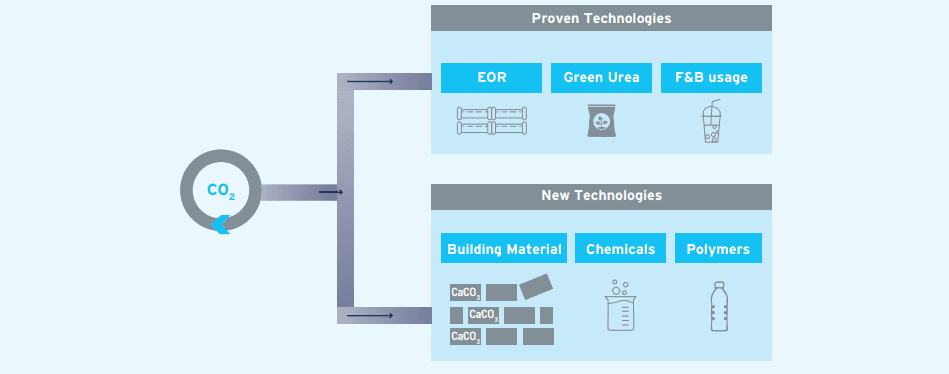
Turning Carbon Dioxide into Treasure: Exploring CO2 Utilization Pathways
Enhanced Oil Recovery (EOR): CO2 helps extract more oil from aging fields, boosting production while locking CO2 underground. India can use this as its oil fields mature.
Green Urea: CO2 is used to make urea from renewable ammonia, cutting emissions and reducing India's reliance on imported ammonia.
Food & Beverage: CO2 is used in drinks, dry ice, and packaging, supporting India’s growing food and beverage industries.
Building Materials: CO2 is turned into concrete and aggregates, reducing the carbon footprint in construction.
Chemicals (Methanol & Ethanol): CO2 is converted into chemicals like methanol and ethanol, cutting fossil fuel dependence.
Polymers (Bio-plastics): CO2 is turned into eco-friendly plastics, helping reduce plastic pollution.
Storing Captured CO2: A Deep Dive
Captured CO2 can be utilized or permanently stored.
Enhanced Oil Recovery (EOR): Injecting CO2 into oil fields boosts oil production while simultaneously storing the CO2 underground.
Enhanced Coal Bed Methane Recovery (ECBMR): Injecting CO2 into coal seams increases methane production and stores CO2 underground.
Deep Saline Aquifers: These vast underground formations can store large volumes of CO2.
Basaltic Formations: Basalt rocks react with CO2 to form stable minerals, offering a secure and long-term storage option.
Carbon Capture, Utilization, and Storage (CCUS) is a transformative solution to combat climate change. Unlike strategies like afforestation or reducing emissions, CCUS directly tackles emissions at the source and removes CO2 from the atmosphere. This makes it uniquely effective for hard-to-abate sectors like cement, steel, and power generation.
While afforestation and reducing fossil fuel usage depend on behavioral changes and land availability, CCUS provides an immediate, scalable solution. It captures CO2 before it enters the atmosphere or repurposes it into sustainable products like fuels, fertilizers, and construction materials. CCUS complements reduction efforts, ensuring a comprehensive path to net-zero targets.
At Desapex, we are committed to helping industries adopt CCUS technologies and make them a cornerstone of our low-carbon future. Decarbonization is vital for sectors reliant on fossil fuels, enabling cleaner processes through CCUS and alternative energy solutions, paving the way toward sustainability.