


Introduction
Buildings today generate massive amounts of data.
Sensors track temperature and occupancy every second. Maintenance teams manage thousands of work orders across multiple systems. Facility managers rely on separate databases, dashboards, spreadsheets, and BIM models just to understand what is happening inside a building.
Yet despite all this technology, many facilities still operate reactively.
Critical equipment fails unexpectedly. Maintenance teams lose time locating assets. Data sits in silos. And operations teams struggle to connect what is happening physically inside the building with the digital systems managing it.
This is exactly where digital twins are changing the future of facility operations.
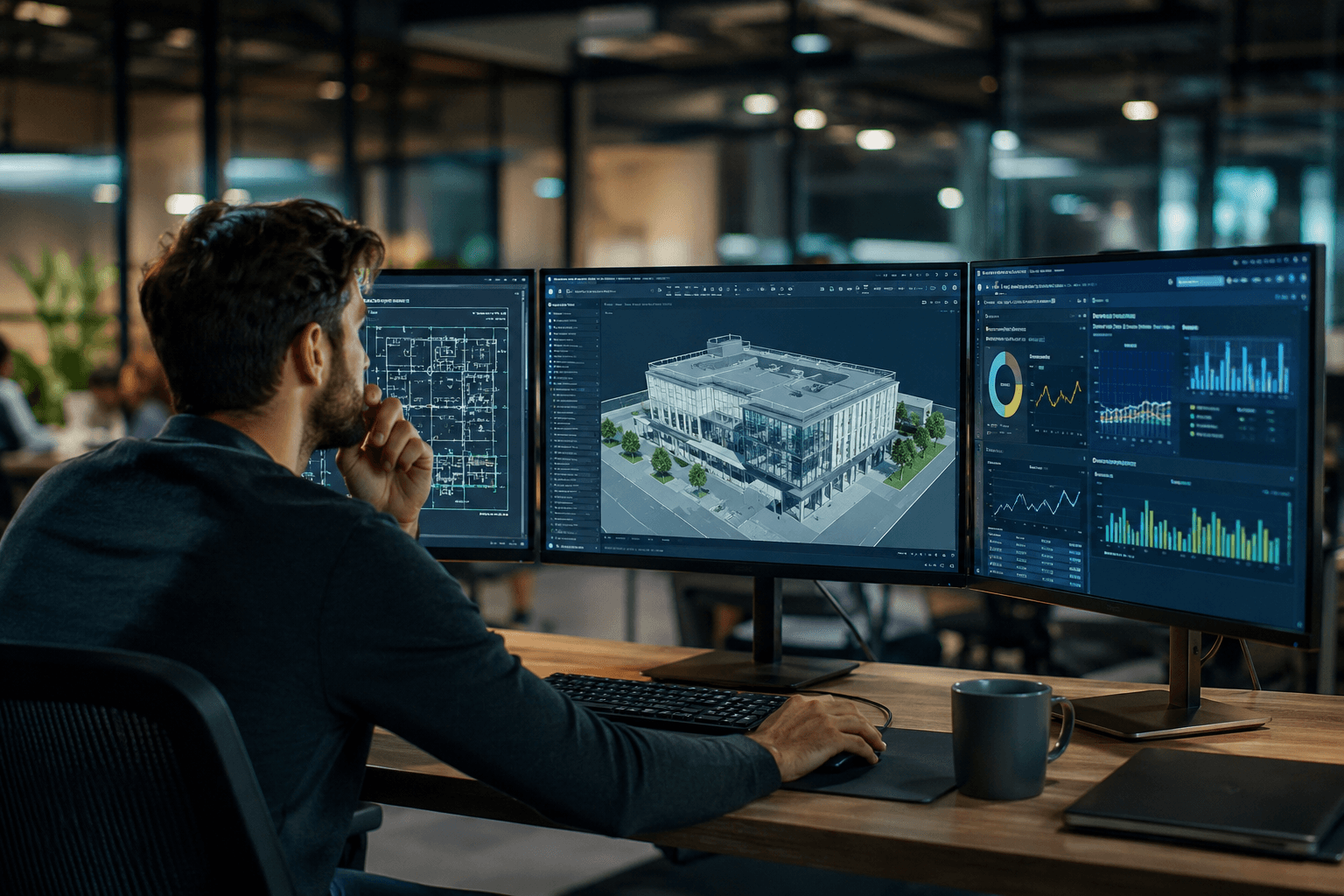
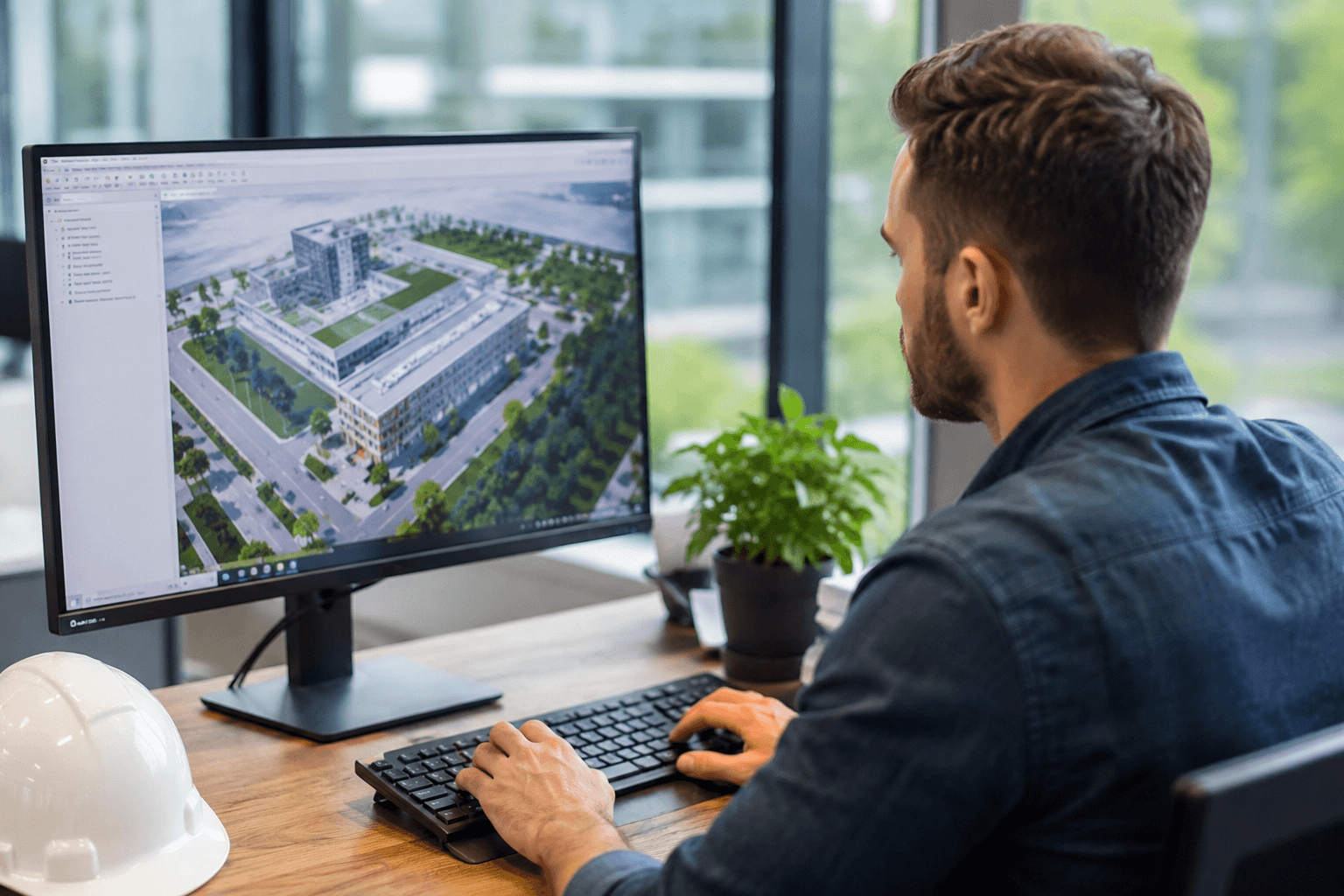
Platforms like Autodesk Tandem are helping organizations integrate IoT systems, CMMS platforms, and enterprise databases into a single intelligent operational environment transforming static BIM models into living, data-driven digital twins.
The Problem
Imagine a large hospital facility at 2:00 AM.
An HVAC system on the sixth floor begins overheating.
The IoT sensor detects abnormal vibration levels, but the alert appears in a separate monitoring dashboard. The maintenance team receives the notification late because the system is disconnected from the CMMS platform. Meanwhile, technicians struggle to identify the exact asset location because the BIM model hasn’t been updated since handover.
By the time the issue is resolved:
Patient comfort is affected
Energy consumption spikes
Critical equipment downtime increases
Maintenance costs escalate
The problem was never the lack of data.
The problem was disconnected systems.
Why This Matters
Modern buildings are becoming increasingly complex.
Today’s facilities contain:
Thousands of interconnected assets
Real-time sensor networks
Smart automation systems
Energy management platforms
Maintenance databases
Building management systems (BMS)
But most organizations still operate these systems independently.
This creates major operational challenges:
Data silos
Delayed maintenance response
Poor visibility into asset performance
Inaccurate facility records
Reactive maintenance workflows
Higher operational costs
According to industry studies, unplanned downtime can cost facilities millions annually depending on the asset type and operational environment.
For data centers, hospitals, airports, manufacturing plants, and commercial campuses, even small operational failures can have massive business impact.
That’s why integrated digital twins are rapidly becoming essential.
What’s Happening?
The core issue is simple:
Buildings generate data, but that data rarely works together.
Traditionally:
BIM models are used during design and construction
IoT systems operate independently
CMMS platforms manage maintenance separately
Databases store historical information in silos
As a result:
Operations teams cannot visualize live building performance spatially
Technicians lack contextual asset information
Maintenance remains reactive
Facility intelligence becomes fragmented
This disconnect prevents organizations from fully utilizing their operational data.
Digital twins solve this by creating a connected ecosystem where BIM, IoT, CMMS, and databases continuously interact in real time.
How Autodesk Tandem Integrates Everything
1. BIM Becomes the Foundation of the Digital Twin
Autodesk Tandem starts by ingesting BIM data from:
Revit
IFC
DWG
Construction handover datasets
This creates the structural backbone of the digital twin.
Instead of becoming outdated after project completion, the BIM model evolves into a continuously updated operational environment.
Inside Tandem, every asset contains:
Spatial location
Equipment metadata
System relationships
O&M documentation
Lifecycle history
Maintenance records
The building model becomes the single source of truth.
2. IoT Turns Static Models into Living Systems
This is where the digital twin becomes dynamic.
IoT sensors continuously stream live data into Autodesk Tandem:
Temperature
Humidity
Occupancy
CO2 levels
Equipment vibration
Energy consumption
Air quality
Water pressure
Instead of viewing this information in disconnected dashboards, Tandem maps the data directly onto the 3D environment.
Visual Storytelling Scenario
A facility manager opens the digital twin of a commercial office tower.
Inside the model:
HVAC zones glow in heatmap colors
Occupancy patterns appear floor-by-floor
Equipment health updates in real time
High-energy consumption areas become instantly visible
Rather than searching through spreadsheets or multiple monitoring systems, the building itself tells the story.
3. CMMS Integration Automates Maintenance
One of the biggest operational gaps in facilities management is the disconnect between monitoring systems and maintenance execution.
Autodesk Tandem bridges this gap by integrating directly with CMMS platforms.
Using Tandem Connect and APIs, organizations can synchronize:
Work orders
Ticket status
Technician assignments
Service schedules
Asset history
Maintenance logs
Real Project Scenario
A pump inside a data center begins showing abnormal vibration.
Here’s what happens:
IoT sensors detect the anomaly
Tandem flags the issue in the digital twin
The system automatically triggers a CMMS work order
A technician receives the task instantly
The technician accesses the exact asset location in 3D
Maintenance manuals and shut-off points are visible before arriving onsite
What once took hours can now happen in minutes.
4. Database Integration Creates a Single Source of Truth
Most buildings operate across multiple disconnected databases:
BMS systems
ERP platforms
Energy management systems
Cloud databases
Asset repositories
Spreadsheet-based tracking
Autodesk Tandem consolidates this information into a centralized operational environment.
Using:
Autodesk Platform Services (APS)
APIs
Webhooks
Cloud integrations
Low-code data pipelines
organizations can stream data from:
AWS
Microsoft Azure
SQL databases
Enterprise applications
directly into the digital twin.
The result is operational clarity.
The digital twin market is growing rapidly because organizations are seeing measurable operational benefits.
Industry reports indicate digital twins can help:
Reduce maintenance costs
Improve asset uptime
Optimize energy consumption
Accelerate maintenance response times
Improve facility visibility
What makes Autodesk Tandem particularly valuable is its ability to connect traditionally disconnected workflows into one operational ecosystem.
Unlike static BIM handover models, Tandem enables:
Continuous operational intelligence
Real-time monitoring
Lifecycle data tracking
Predictive maintenance workflows
This is especially valuable for:
Hospitals
Airports
Data centers
Manufacturing plants
Smart campuses
Commercial real estate portfolios
What Should Companies Do Next?
Organizations looking to implement digital twins successfully should focus on five priorities:
Start with Accurate BIM Data
A digital twin is only as strong as its underlying asset information.
Identify Critical Assets First
Focus initial IoT integration on high-risk equipment:
HVAC systems
Pumps
Electrical infrastructure
Cooling systems
Connect Maintenance Workflows Early
Integrating CMMS platforms early creates faster operational value.
Build a Unified Data Strategy
Avoid siloed systems by creating standardized data structures and naming conventions.
Think Beyond Visualization
Digital twins are not just 3D dashboards they are operational intelligence platforms.
The Next Evolution of Digital Twins
The future of digital twins will go far beyond visualization.
Emerging technologies will introduce:
AI-driven predictive maintenance
Autonomous building optimization
Real-time energy forecasting
Occupancy intelligence
Automated operational decision-making
Generative facility analytics
As IoT adoption accelerates and buildings become smarter, digital twins will become the operational core of intelligent facilities.
Eventually, buildings won’t just be monitored.
They will continuously learn, predict, and optimize themselves.
A Shift from Reactive to Intelligent Operations
For decades, facility operations have been fragmented.
Data existed everywhere but intelligence existed nowhere.
Digital twins are changing that.
By integrating BIM, IoT, CMMS, and enterprise databases into a connected ecosystem, Autodesk Tandem transforms buildings from static infrastructure into intelligent operational environments.
The real value is not simply seeing a building in 3D.
The real value is understanding how the building thinks, performs, and evolves in real time.
And for organizations managing complex facilities, that shift could redefine the future of operations entirely.
How Desapex Helps Organizations Build Intelligent Digital Twins
At Desapex, we help organizations transform BIM data into operational digital twins using platforms like Autodesk Tandem.
Our expertise includes:
Digital Twin Implementation
BIM-to-FM workflows
IoT integration
CMMS integration
Asset data structuring
Scan-to-BIM and reality capture
Facility management digitization
Data center digital twins
Smart building operations
From design and construction through facility operations, we help clients create connected ecosystems that improve visibility, automate maintenance, and enable data-driven decision-making across the entire building lifecycle.