
Vertical:
Service Overview
Asset Information Management (AIM) is the process of organizing, validating, governing and maintaining asset-related information throughout the lifecycle of buildings, infrastructure and industrial facilities. It ensures that asset owners, facility managers, engineers and operators can access reliable information to make informed decisions.
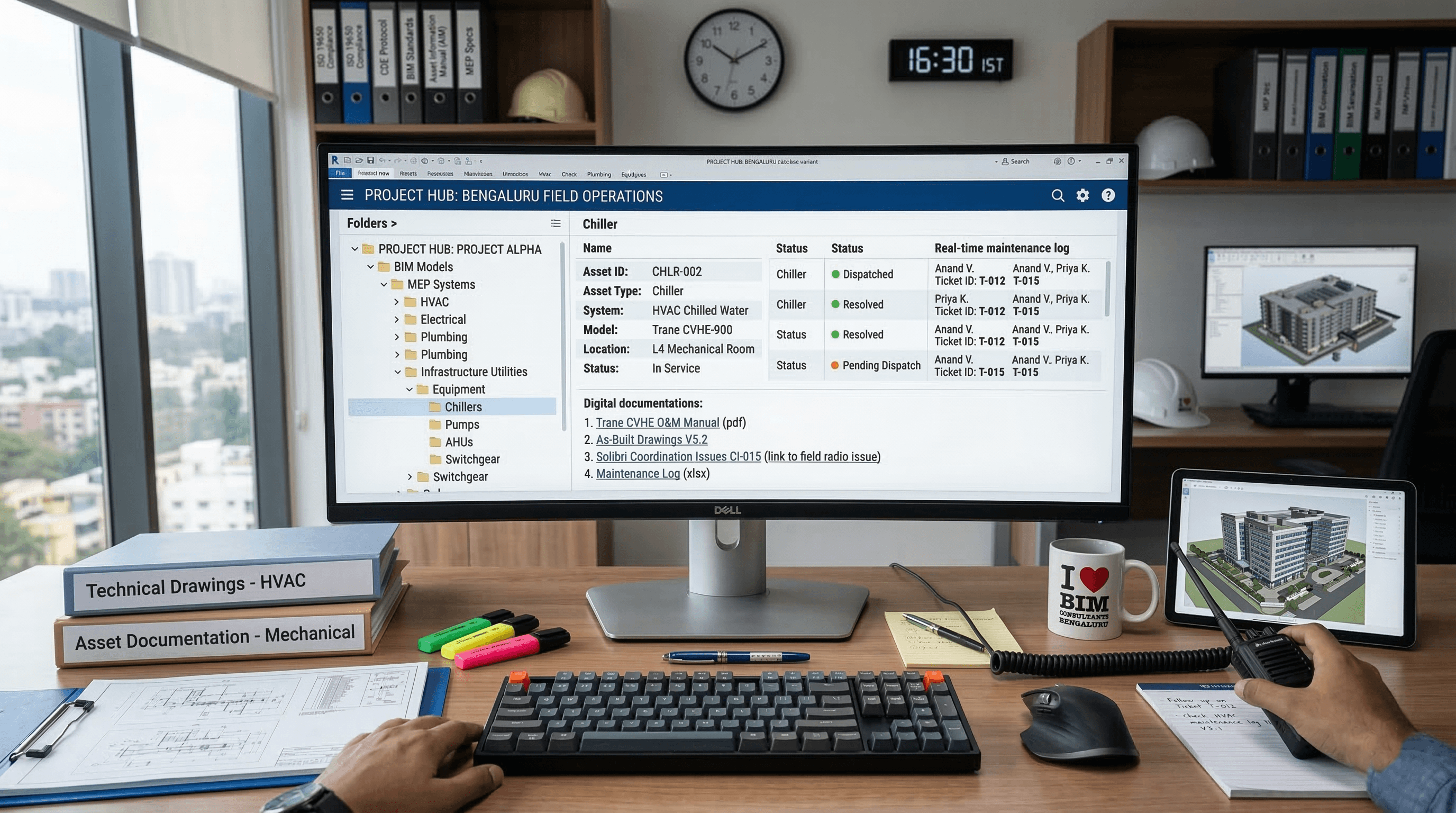
At Desapex, we deliver end-to-end Asset Information Management services by integrating Building Information Modeling (BIM), ISO 19650-aligned information management, Common Data Environments (CDE) and Digital Twin technologies. From new construction handovers to existing operational assets, we transform disconnected drawings, equipment records, asset registers and maintenance documentation into structured, accessible and lifecycle-ready digital information.
With engineering and digital delivery teams established in India and Sweden, we support global projects through a combination of international standards, multidisciplinary engineering expertise and locally relevant operational requirements. Our approach connects asset information with Computerized Maintenance Management Systems (CMMS), Building Management Systems (BMS) and energy management platforms to enable reliable maintenance planning, asset performance monitoring and future-ready facility operations.
What is Asset Information Management (AIM), and why is it important?
Asset Information Management is the structured management of asset data, documentation, BIM models and maintenance information throughout an asset's lifecycle. It helps organizations maintain accurate records, improve information accessibility, support preventive maintenance, reduce operational risk and make informed decisions about asset performance and lifecycle investments.
An Asset Information Model, also abbreviated AIM in BIM and ISO 19650 contexts, is the organized information resource used to support these activities.
Our Digital-First Approach
Define Asset Information Requirements
Establish asset information requirements, classification standards, responsibilities and ISO 19650-aligned workflows to ensure data is structured for operational use from the outset.
Capture and Validate Asset Data
Consolidate BIM models, as-built drawings, laser scanning records, asset registers and technical documentation into verified, information-rich asset datasets.
Structure and Govern Information in a CDE
Organize asset hierarchies, metadata, equipment identifiers and documentation through Common Data Environment workflows, version control and quality assurance.
Integrate BIM, Digital Twins and FM Systems
Connect validated asset information with Digital Twins, CMMS, CAFM and relevant operational platforms to support maintenance, asset tracking and connected facility management.
Enable Lifecycle Intelligence and Continuous Improvement
Establish update and governance workflows that keep asset information dependable while supporting lifecycle planning, energy analysis and predictive maintenance readiness.
Core Deliverables
Asset Information Model (AIM): A structured, lifecycle-ready information resource linking asset data, BIM models, documents and operational requirements.
Asset Registers and Equipment Data: Validated asset inventories, equipment identifiers, locations, technical attributes, classifications and relevant maintenance information.
ISO 19650-Aligned Information Framework: Asset information requirements, governance procedures, information exchange and quality control workflows aligned with the project's applicable standards.
CDE and Information Governance Setup: Structured document organization, information status, versioning, approval workflows and controlled access to reliable asset records.
COBie and BIM-to-FM Handover Data: Structured information exchanges, including COBie where specified, prepared for downstream facility and asset management applications.
CMMS, CAFM and Digital Twin Integration: Data mapping and integration outputs linking asset information with maintenance systems and digital operational environments.
Asset Data Quality and Validation Reports: Information completeness reviews, duplicate and inconsistency checks, metadata validation and issue registers to support reliable handover.
Lifecycle Information and Maintenance Framework: Organized documentation, asset condition and maintenance information to support planned maintenance, replacements and operational decision-making.
Why Choose Desapex
Desapex combines engineering expertise, ISO 19650 information management and advanced digital technologies to transform asset data into dependable information for daily operations and long-term asset value.
ISO 19650 Information Management Expertise: Our BSI-certified BIM information management capability supports controlled data delivery, structured CDE workflows and consistent information management practices across projects and asset lifecycles.
Engineering-Led BIM-to-FM Integration: Our multidisciplinary understanding of architectural, structural and MEP systems helps bridge the gap between engineering information and practical facility maintenance requirements.
Connected Digital Twin and Asset Intelligence: We connect BIM-based information with operational platforms, enabling a foundation for digital asset tracking, maintenance management, energy monitoring and performance analysis.
Lifecycle-Focused, Not Just Handover-Focused: We establish information structures and governance workflows that support assets beyond construction and commissioning, through operations, retrofits, replacement and ongoing maintenance.
Global Expertise with Local Delivery Understanding: With established teams in Bengaluru and Stockholm, Desapex brings internationally aligned workflows and locally relevant technical understanding to projects across different markets and asset sectors.
Unique Selling Proposition
Unlike approaches that stop at documentation, BIM handover or standalone asset registers, our Asset Information Management services bring together reality capture, information-rich BIM, ISO 19650 governance, Common Data Environments and operational system integration.
We help asset owners and facility managers establish a reliable digital information foundation that supports day-to-day maintenance, long-term lifecycle planning, energy management and Digital Twin adoption.
Our differentiator is the ability to move from verified physical asset information to structured, governed and operationally connected data through an engineering-led digital delivery process.
Frequently Asked Questions
What is the difference between Asset Information Management and an Asset Information Model?
Asset Information Management is the process of collecting, validating, organizing and governing asset-related data throughout its lifecycle. An Asset Information Model (AIM) is the structured collection of information used to support asset management activities, including maintenance, inspections and operational decisions.
How does BIM support Asset Information Management?
What is the role of ISO 19650 in Asset Information Management?
How does a Common Data Environment support asset information?
What is the difference between Asset Information Management and CMMS?
Does Desapex provide Asset Information Management services internationally?