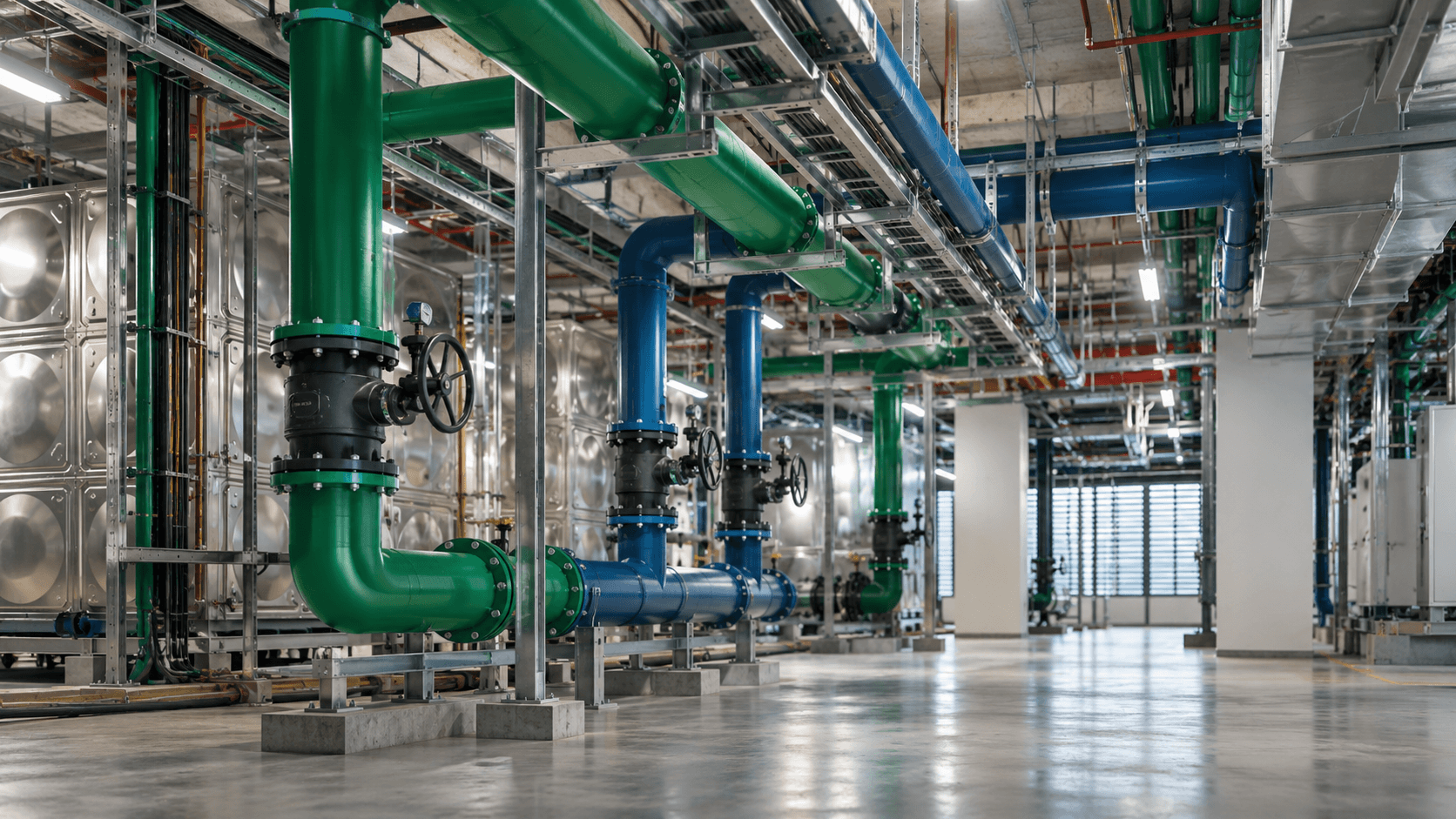
Vertical:
Service Overview
Public Health Engineering is fundamental to the safety, functionality and long-term performance of every building. Desapex provides end-to-end PHE design and plumbing engineering services covering potable water distribution, hot and cold water systems, sanitary drainage, sewage treatment, stormwater management, rainwater harvesting, greywater recycling and Zero Liquid Discharge strategies.
Our engineers combine technical design expertise with BIM-based multidisciplinary coordination to develop systems that are practical to construct, efficient to operate and adaptable to future building requirements. The objective is not simply to route pipes it is to design an integrated water and sanitation infrastructure that performs reliably throughout the building lifecycle.
From residential and commercial developments to industrial facilities and complex infrastructure, our PHE designs focus on design accuracy, code compliance, water efficiency, spatial optimisation, maintainability and seamless integration with the wider MEPF environment. These priorities reflect Desapex's existing PHE methodology and its broader BIM-led multidisciplinary delivery model.
What is PHE Design?
PHE Design, or Public Health Engineering Design, is the engineering of water supply, plumbing, sanitation, drainage, sewage, stormwater and water-reuse systems within buildings and infrastructure. It ensures that clean water is distributed reliably, wastewater is removed safely, stormwater is managed effectively and water resources are used efficiently.
Desapex integrates PHE design with BIM and multidisciplinary MEP coordination, helping identify spatial conflicts early and creating coordinated building-services information for design and construction.
Our Digital-First Approach
BIM-Led PHE Design
We develop PHE systems within a coordinated BIM environment, enabling water supply, drainage and plumbing networks to be visualised alongside architectural, structural, HVAC, electrical and fire-protection systems before construction.
Engineering-Driven System Sizing
Water demand, pipe sizing, drainage capacity and system requirements are evaluated through engineering calculations so that infrastructure is designed around actual project needs rather than rule-of-thumb assumptions.
Multidisciplinary Clash Coordination
PHE routes, shafts, plant areas and service zones are coordinated digitally with other disciplines to identify potential clashes early, improve constructability and reduce avoidable changes during execution
Water-Efficient Design Strategies
Rainwater harvesting, greywater recycling, stormwater management and Zero Liquid Discharge strategies can be integrated into the PHE design to reduce potable-water demand and support project sustainability objectives
Lifecycle-Ready Digital Information
We structure PHE design information for use beyond design development, helping create a reliable digital foundation for construction coordination, future modifications and long-term building operations
Core Deliverables
From Water Demand to Coordinated PHE Design
Potable Water Supply Design - Design of incoming water supply, storage, distribution and pressure requirements for reliable potable-water delivery.
Cold & Hot Water Distribution Design - Pipe sizing, routing and coordinated distribution for domestic cold- and hot-water systems.
Pipe Sizing, Routing & Layouts - Optimised pipe networks developed around hydraulic requirements, space availability, maintainability and multidisciplinary coordination.
Sanitary & Sewage Drainage Design - Soil, waste and drainage systems engineered for efficient and hygienic wastewater conveyance.
Sewage Treatment Plant (STP) Design - Planning and engineering integration of sewage-treatment systems based on project requirements.
Stormwater Management & Calculations - Stormwater collection, drainage and discharge strategies developed using project-specific rainfall and site requirements.
Rainwater Harvesting System Design - Collection, storage and reuse strategies designed to reduce dependence on potable-water sources.
Greywater Recycling System Design - Treatment and reuse strategies for suitable non-potable applications within the development.
Zero Liquid Discharge (ZLD) Strategy - Water-management strategies aimed at maximising recovery and minimising liquid discharge where project requirements call for ZLD.
BIM-Coordinated PHE Models & Layouts - Digitally coordinated PHE systems developed in integration with architectural, structural and other building-services disciplines.
Our PHE design methodology considers more than the immediate design requirement. We evaluate system performance, coordination, water efficiency, maintainability and future operational needs from the outset.
Depending on project location and scope, designs can be developed with reference to applicable IS requirements, CPHEEO guidance, UPC, IPC, BS, EN, ASHRAE and CIBSE guidance, alongside relevant local authority requirements.
Why Choose Desapex
Integrated MEPF Engineering
PHE is developed as part of a wider coordinated building-services environment rather than as an isolated plumbing discipline. Desapex combines Public Health Engineering with mechanical, electrical, fire, BIM and digital engineering capabilities. MEP Brochure Landscape
BIM-First Coordination
Our engineers use digital models and collaborative workflows to improve spatial coordination, identify design conflicts earlier and provide greater visibility into complex building-services systems.
ISO 19650 Digital Delivery Expertise
Desapex's BIM and information-management processes are built around ISO 19650-1 and ISO 19650-2, supporting structured information delivery and lifecycle-focused project management. MEP Brochure Landscape
Sustainable Water Engineering
We address water as a lifecycle resource through rainwater harvesting, greywater recycling, stormwater management, wastewater treatment and ZLD strategies rather than considering plumbing purely as water supply and disposal.
Design to Operations Thinking
Our approach integrates design, construction and operational considerations into a common digital information environment, helping project teams make better-informed decisions throughout the asset lifecycle.
Unique Selling Proposition
Desapex combines Public Health Engineering expertise with BIM-led coordination, sustainable water strategies and lifecycle-focused digital delivery transforming conventional plumbing design into coordinated, data-driven building infrastructure.
Desapex's PHE design approach can support commercial buildings, corporate real estate, residential developments, data centres, industrial and manufacturing facilities, retail developments, hospitality, institutional buildings and infrastructure projects.
Frequently Asked Questions
What does PHE mean in building design?
PHE stands for Public Health Engineering. It covers the design of building water supply, plumbing, sanitation, drainage, sewage, stormwater and water-management systems required for safe and efficient building operation.
What services are included in PHE design?
What is the difference between PHE design and plumbing design?
How does BIM improve PHE design?
Does Desapex provide rainwater harvesting and greywater recycling design?
Which standards are considered for PHE design?