

Introduction: From Factory to Living Digital Ecosystem
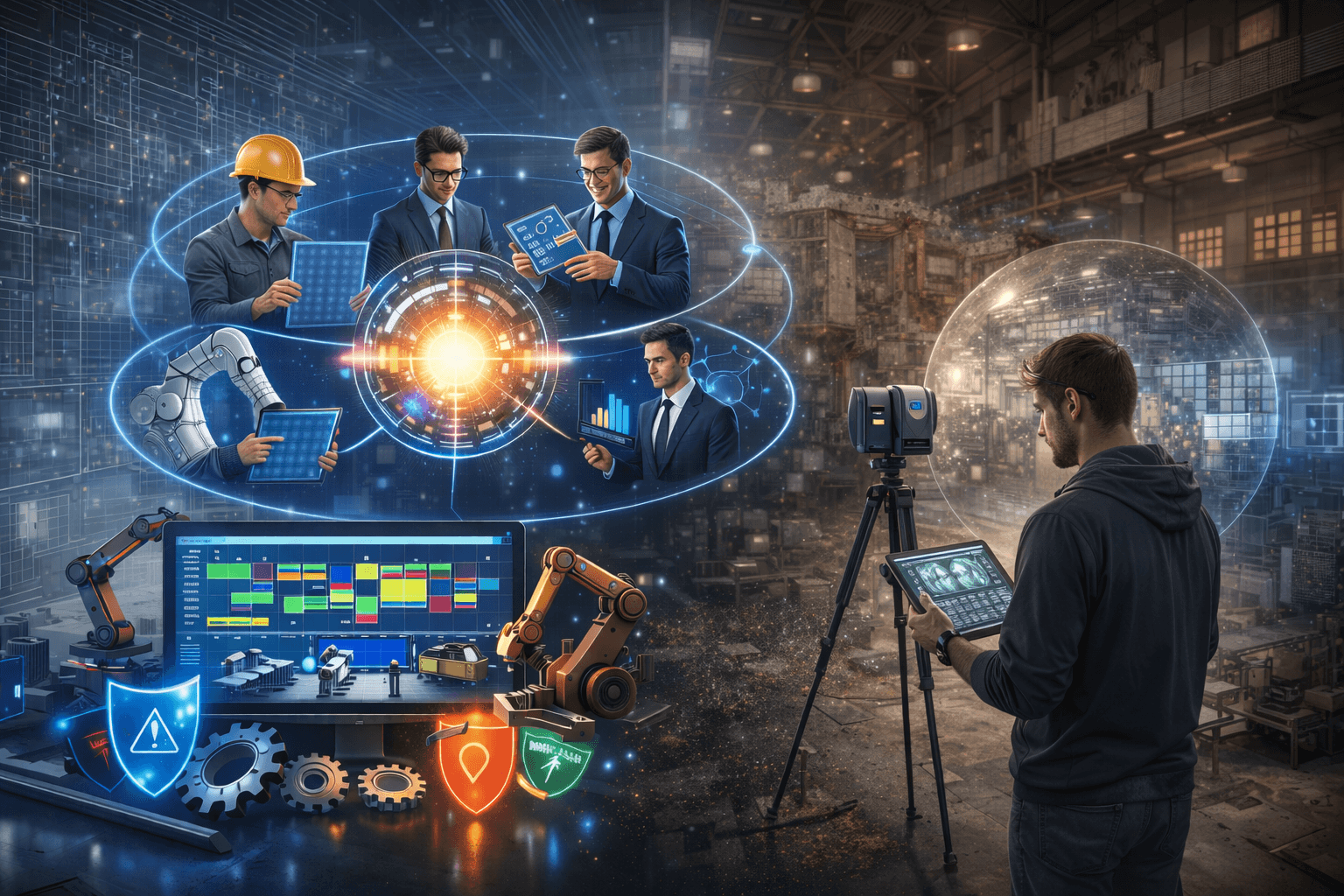
A factory is no longer just a physical space filled with machines, conveyors, and production lines.
Today’s competitive manufacturing landscape demands something more a living, intelligent, continuously evolving digital ecosystem.
This is where the Digital Factory Life Cycle comes in.
A life cycle is not a poetic “circle of life” or the age of a facility. It is a structured progression of stages through which a digital factory evolves from the first concept to full-scale operations and continuous optimization. Each phase builds on the previous one, creating a loop where data and models are reused, refined, and upgraded over time.
At the center of this loop sits one critical asset:
the foundational 3D digital model.
This model becomes the unbreakable backbone for planning, design, construction, operations, upgrades, and even eventual expansion or demolition. It enables factories to move from fragmented decision-making to data-driven, simulation-backed, and future-ready operations.
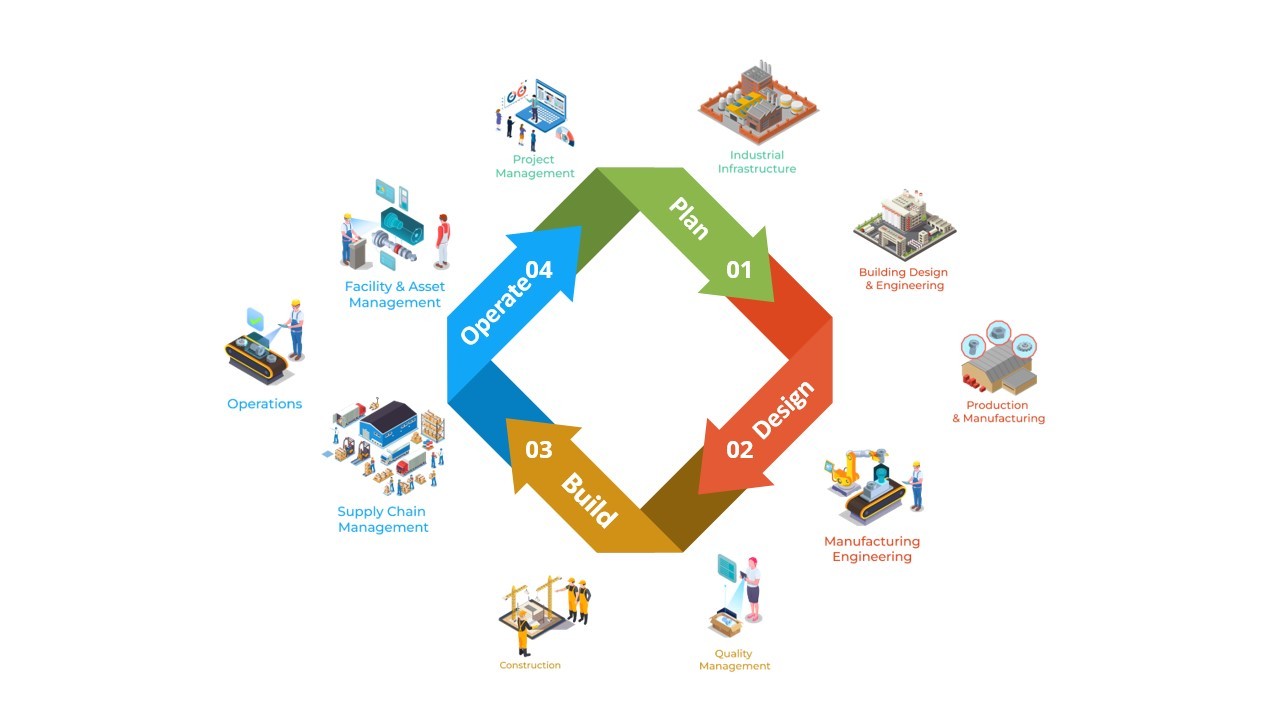
The digital factory life cycle unfolds across four core phases:
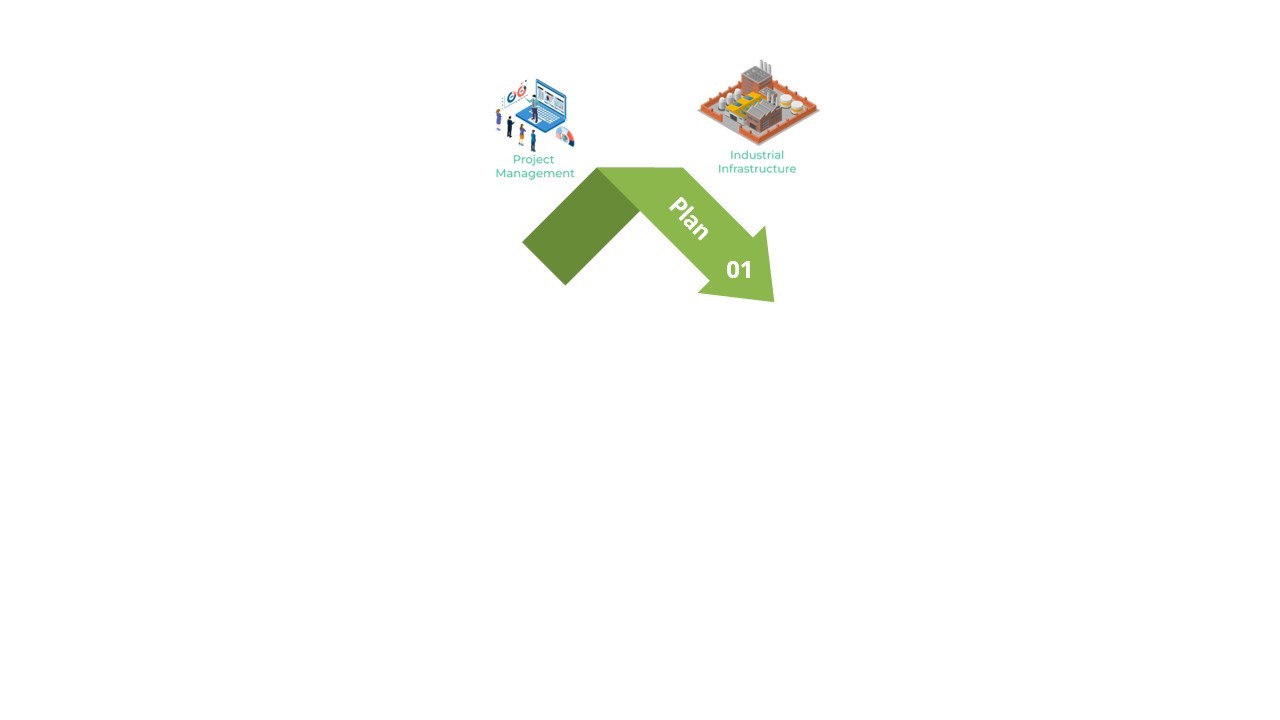
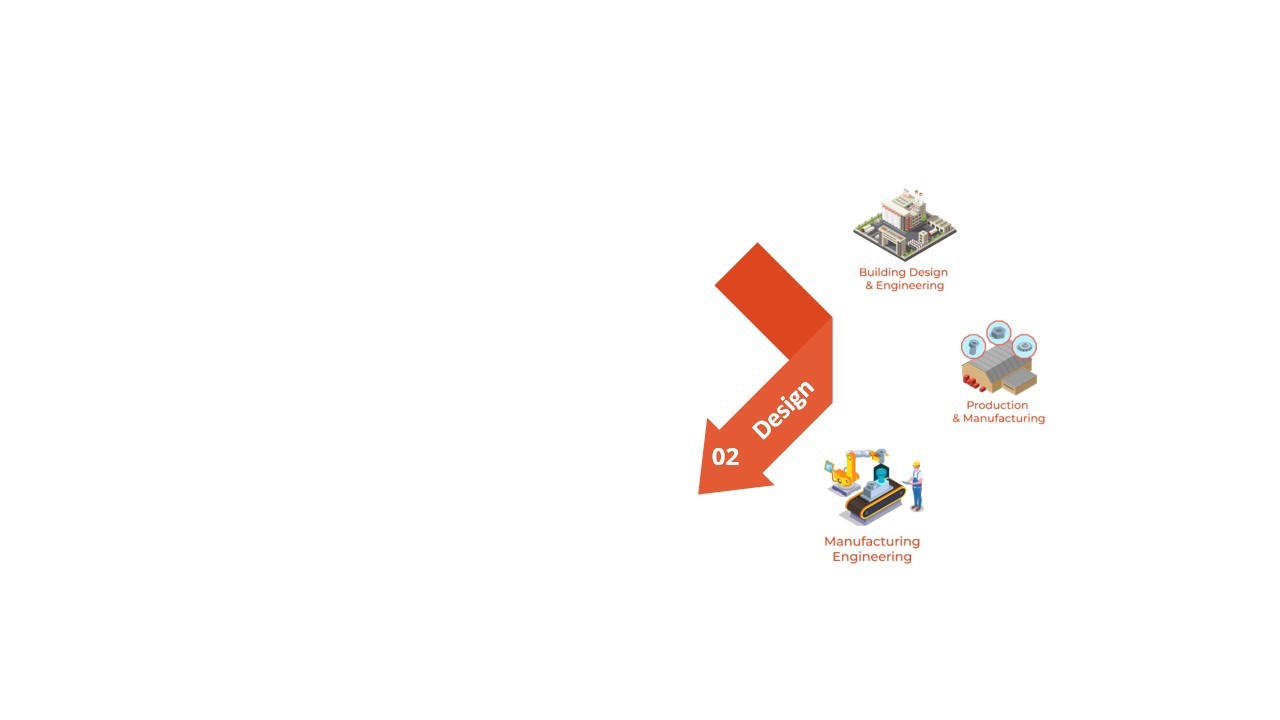
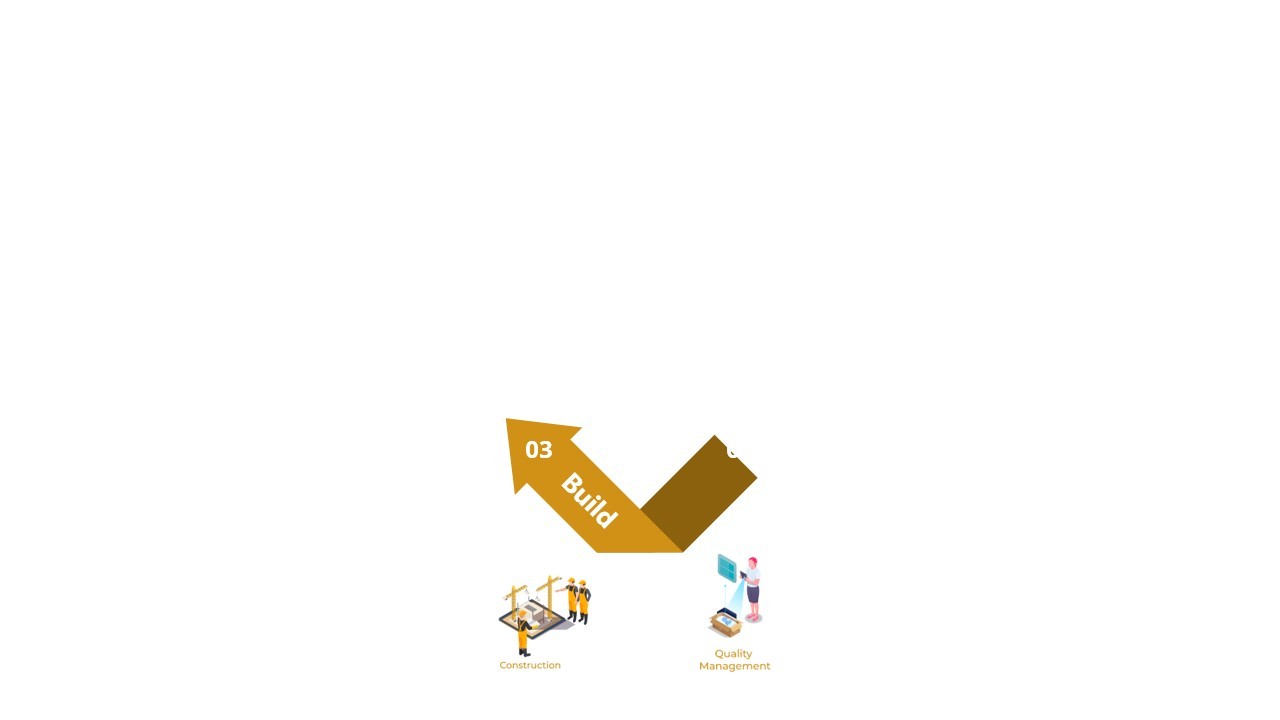
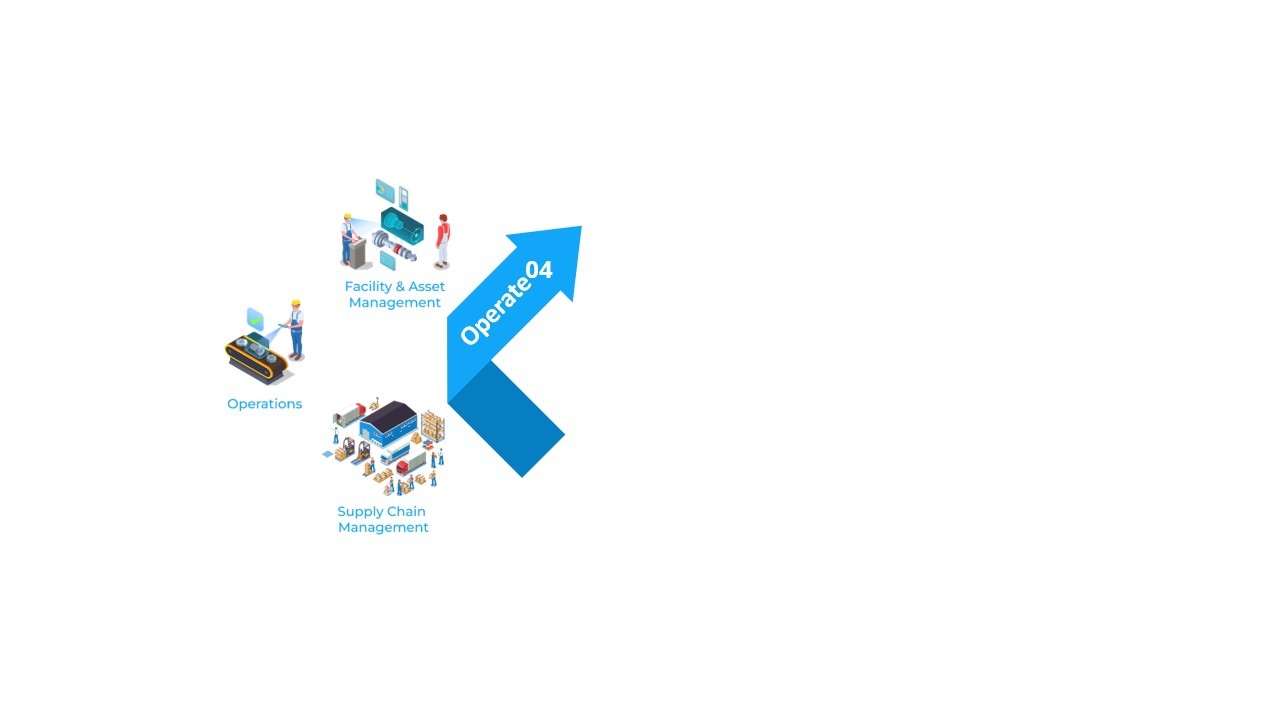
Plan → Design → Build → Operate
Each phase delivers distinct value from CAPEX-heavy new developments to OPEX-driven optimizations in operational plants. Together, they form a continuous loop that transforms factories into intelligent, adaptive assets.
Let’s begin with the most critical stage of all the Plan phase, the non-negotiable launchpad of every successful digital factory.
Plan: Building the Digital Foundation
We live in a hyper-digital world shaped by instant payments, smart devices, AI-driven decisions, and seamless connectivity. Manufacturing facilities cannot afford to lag behind.
The Plan phase establishes a rock-solid digital foundation by shifting from fragmented, hardware-heavy documentation to centralized, intelligent, and collaborative digital systems. It prepares the factory for everything that follows.
This phase typically divides into two paths:
Greenfield projects (new factories)
Brownfield projects (existing factory upgrades)
Both require different strategies but share the same goal:
creating a reliable digital baseline for all future decisions.
Greenfield Projects
Greenfield projects begin with a blank canvas.
The first step is building structured project planning tools detailed Gantt charts and a Common Data Environment (CDE). This centralized digital platform becomes the single source of truth where architects, engineers, contractors, and stakeholders collaborate on schedules, budgets, and designs.
Instead of scattered email threads and version confusion, the CDE ensures:
Real-time collaboration
Controlled documentation
Transparent decision-making
Traceable approvals
Planning is then strengthened using discrete event simulation to model high-level production flows. Teams can validate time studies virtually and test “what-if” scenarios such as:
Adjusting assembly line layouts
Changing takt times
Rebalancing workstations
This virtual foresight allows organizations to detect inefficiencies early and make informed decisions before physical construction begins dramatically reducing risk and costly changes later.
Brownfield Projects
Brownfield projects deal with existing factories, many of which were built using outdated drawings or incomplete documentation.
To modernize these facilities, accurate digital capture is essential. This is achieved through 3D laser scanning using LiDAR technology.
Laser scanners emit millions of laser points that bounce back to capture the facility’s geometry with extreme precision, converting physical spaces into detailed digital representations.
Once processed through calibration software, this data generates:
Panoramic 360° Images
Provide street-view-style navigation inside facilities
Enable virtual walkthroughs and remote inspections
Accurate to approximately 5 mm per meter
VR-ready for immersive reviews
Point Cloud Data
A dense 3D coordinate map of millions of points
Captures x, y, z positions of every surface
Accuracy up to 1 mm per meter
Serves as the base for building intelligent 3D models
Together, these outputs create a live digital replica of the existing plant, forming the foundation for redesign, expansion, or optimization initiatives.
Design: From Plans to Virtual Reality
Once planning establishes the digital foundation, the Design phase transforms data into actionable intelligence.
This stage converts raw planning inputs into intelligent 3D models that represent every aspect of the future or existing factory. Decisions made here determine how effectively organizations extract value from their digital foundation.
Like the Plan phase, Design workflows differ for greenfield and brownfield projects.
Greenfield Design
Design begins with precision measurements such as excavation scanning to calculate earthwork volumes accurately. This ensures billing reflects actual work completed rather than estimated machine hours.
Next, teams develop a complete 3D model of the factory, including:
Architecture and structure
Mechanical, electrical, and plumbing systems
Production equipment
Conveyors and logistics paths
Unlike traditional 2D drawings, this intelligent 3D model becomes a complete digital replica of the future facility ready for analysis, coordination, and production documentation.
Brownfield Design
For brownfield projects, point cloud data captured during planning is used to create intelligent 3D models of existing facilities.
These models represent:
Structural and architectural elements
Building services
Machines and production systems
Material handling systems
This results in a highly accurate digital twin of the current facility, enabling precise redesign, retrofits, and expansion planning.
Design Coordination and Clash Detection
The Common Data Environment established earlier now becomes the collaboration hub for all stakeholders.
Advanced review platforms integrate multiple file formats into one unified environment, enabling seamless coordination between disciplines.
Clash detection plays a crucial role here. By combining models from all stakeholders, teams can identify conflicts such as pipe routes intersecting with structural beams before construction begins.
Resolving these clashes digitally ensures:
Reduced change orders
Lower rework costs
Faster construction timelines
Higher design accuracy
Even small upgrades, such as installing a new machine, can be digitally tested for space constraints, service connections, and access routes before physical implementation.
Build: Turning Virtual into Physical Reality
With coordinated designs and validated models in place, construction begins.
But without proper digital controls, even the best design can face delays, budget overruns, and miscommunication on site.
Digital engineering ensures that construction remains aligned with design intent and project goals.
4D Construction Simulation
By integrating time into the 3D model, teams create 4D simulations that visualize construction sequences.
Real-world parameters such as crew size, man-hours, equipment availability, and weather conditions are incorporated to generate accurate schedules.
This enables:
Phase-wise simulation of construction activities
Automated quantity takeoffs
Real-time progress tracking
Planned vs actual comparisons
Delays can be identified early and mitigated through schedule adjustments, resource reallocation, or sequencing changes.
Site and Issue Management
The CDE evolves into a live construction management platform.
Contractors and stakeholders can:
Access updated drawings and RFIs
Track material costs and changes
Monitor task progress
Log and resolve issues with audit trails
Centralized monitoring ensures transparency, accountability, and alignment across all teams.
Operational Dynamic Simulation
Even during construction, production simulations can be run to validate operational efficiency.
These simulations model:
Material flows
Operator movements
AGV routes
Conveyor speeds
Production throughput
This allows teams to identify bottlenecks and optimize layouts before commissioning, ensuring the factory performs as intended from day one.
Operate: Sustaining Peak Performance
The Operate phase is where the digital factory begins delivering long-term value.
Once operational, the facility must run efficiently for years to generate return on investment. Digital tools ensure continuous optimization and informed decision-making.
Simulation and Bottleneck Optimization
Production lines are modeled using discrete event simulation, incorporating:
Workstations and buffers
Cycle times and takt times
Material flow logic
Staffing patterns
Multiple scenarios can be tested virtually before implementing changes on the shop floor. This reduces trial-and-error and protects production continuity.
Dynamic Digital Twin
The digital twin evolves into a real-time operational platform by integrating live data from:
PLCs and SCADA systems
IoT sensors
MES and ERP systems
This allows teams to monitor machine health, energy consumption, and performance directly within the 3D environment.
Integration with CMMS enables predictive maintenance, linking assets to service records, spare parts, and maintenance schedules.
Organizations using predictive maintenance and digital twins have reported:
Up to 50% reduction in unplanned downtime
18–25% lower maintenance costs
Significant improvements in capacity and efficiency
The digital twin becomes a daily decision-support system for operations, maintenance, and management teams.
Conclusion: A Continuous Digital Loop, Not a One-Time Project
A digital factory is not built once and forgotten. It evolves continuously.
The true power of the Digital Factory Life Cycle lies in its looped nature. The same digital foundation created during planning supports design, construction, operations, upgrades, and future expansions. When major changes occur, the cycle begins again stronger and more informed than before.
Organizations that embrace this life cycle move beyond static facilities to intelligent, adaptive, and data-driven factories. They reduce risks before construction, optimize operations after commissioning, and continuously improve performance over time.
In a world where manufacturing competitiveness depends on agility, efficiency, and insight, the Digital Factory Life Cycle is no longer optional.
It is the blueprint for building factories that are not just operational but future-ready.