Webinar
Inside the Data Center
Discover the structural engineering behind the mission-critical digital world.
Friday, 30 Oct 2026
11:30 AM CET | 4:00 PM IST


What If the Fire Trucks Arrive on Time But the Water Doesn't?
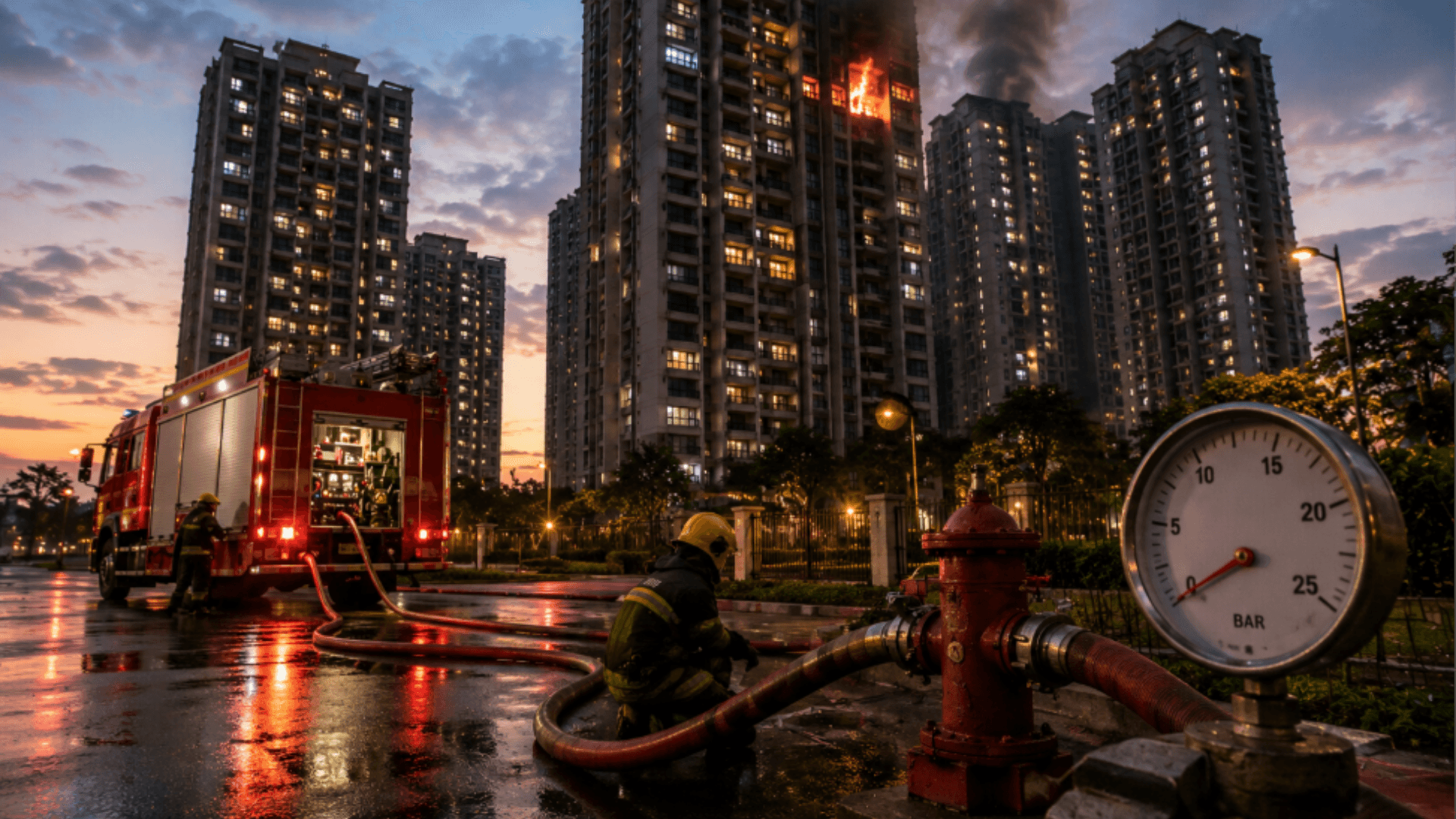
A fire breaks out on the 18th floor of a residential tower during peak summer. Firefighters reach the site within four minutes. Sprinklers activate. Hydrants are opened.
But the pressure gauge tells a different story: readings that should hold above 4.5 bar are sliding toward 2 bar and falling.
The municipal network is already under strain from a spike in seasonal demand, nearby construction drawing off supply, and a summer shortage the city has been rationing around for weeks. Fire crews now face a challenge no amount of training can fully overcome: there simply isn't enough water to fight the fire at the rate it needs fighting.
For decades, urban fire protection strategy has rested on one quiet assumption that water would always be there when needed. That assumption is no longer safe to make.

Why This Matters
Cities are growing vertically and horizontally at a pace their water networks were never designed for.
At the same time, urban areas are contending with:
Rising water demand from denser populations
Aging utility infrastructure nearing the end of its design life
Climate-driven droughts shrinking reserves
Groundwater depletion
More frequent extreme weather events
Public conversations about water shortages tend to focus on drinking water and daily consumption. A far more consequential question rarely comes up
Will there be enough water available when a major fire occurs?
For fire departments, developers, city planners, and building owners, the answer determines whether an incident is controlled within minutes or escalates into a disaster that makes headlines for the wrong reasons.
THE 90-MINUTE WINDOW: The first 90 minutes decide everything. Fire engineers consistently point to this early window as the point of no return the stretch where a fire is still small enough to stop with the water on hand, or already growing faster than any response can catch up to. Whether hydrants deliver full flow, pumps hold pressure, and reserves are where they should be in those first 90 minutes is often the single biggest factor separating a contained incident from a citywide emergency.
The Core Problem: What's Happening?
Nearly every fire protection system in use today depends on a single assumption:
A reliable water source will always be available.
That assumption underpins:
Fire hydrant systems
Sprinkler systems
Wet risers
Hose reels
Fire brigade operations
Water monitors and deluge systems
But urban water infrastructure is now routinely operating beyond the conditions it was originally designed for.
The Challenge Is Growing
Picture a city built for 500,000 residents that now serves more than a million. The same pipe network the same pumps, the same trunk mains must now support far more homes, commercial buildings, industrial facilities, and high-rise developments than its designers ever planned for.
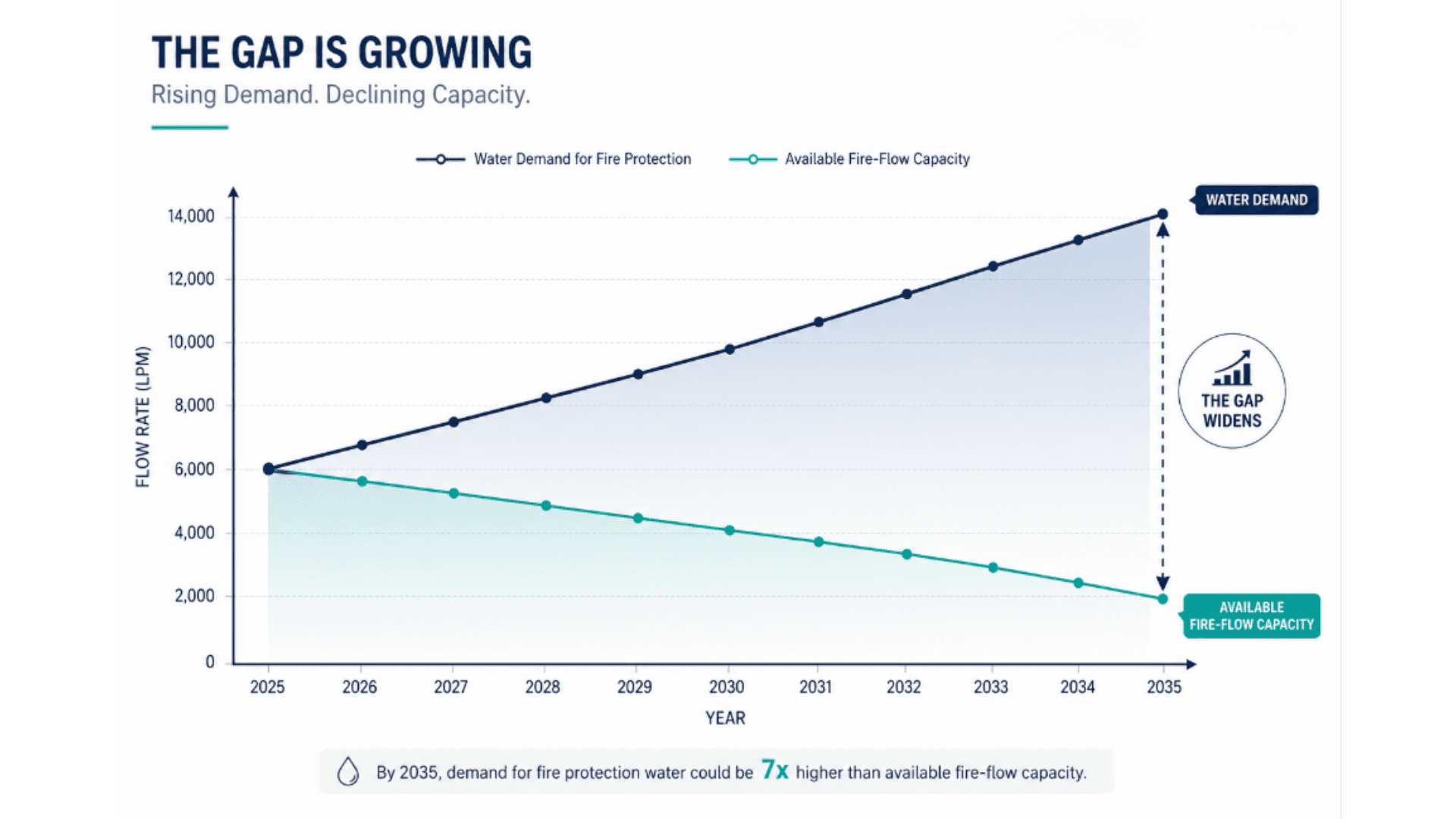
As demand climbs, emergency fire-flow capacity quietly declines. The result is a vulnerability that stays invisible until the moment it matters most.
Scenario 1: The High-Rise Under Pressure
A newly developed residential district includes several towers above 30 floors. On paper, everything is compliant:
Fire pumps installed
Sprinkler systems operational
Hydrants available
Emergency response plans approved
Then a city-wide water shortage hits, and municipal pressure drops sharply. When firefighters connect to the nearest hydrants, the available flow is far below what the design assumed.
The building's internal systems keep running but external firefighting support, the backup that compliance was supposed to guarantee, is suddenly limited.
A fire that should have been contained in minutes now demands more resources, more time, and more risk to the crews on the ground.
Fire protection systems are only as reliable as the water source supporting them.
Scenario 2: The Industrial Facility
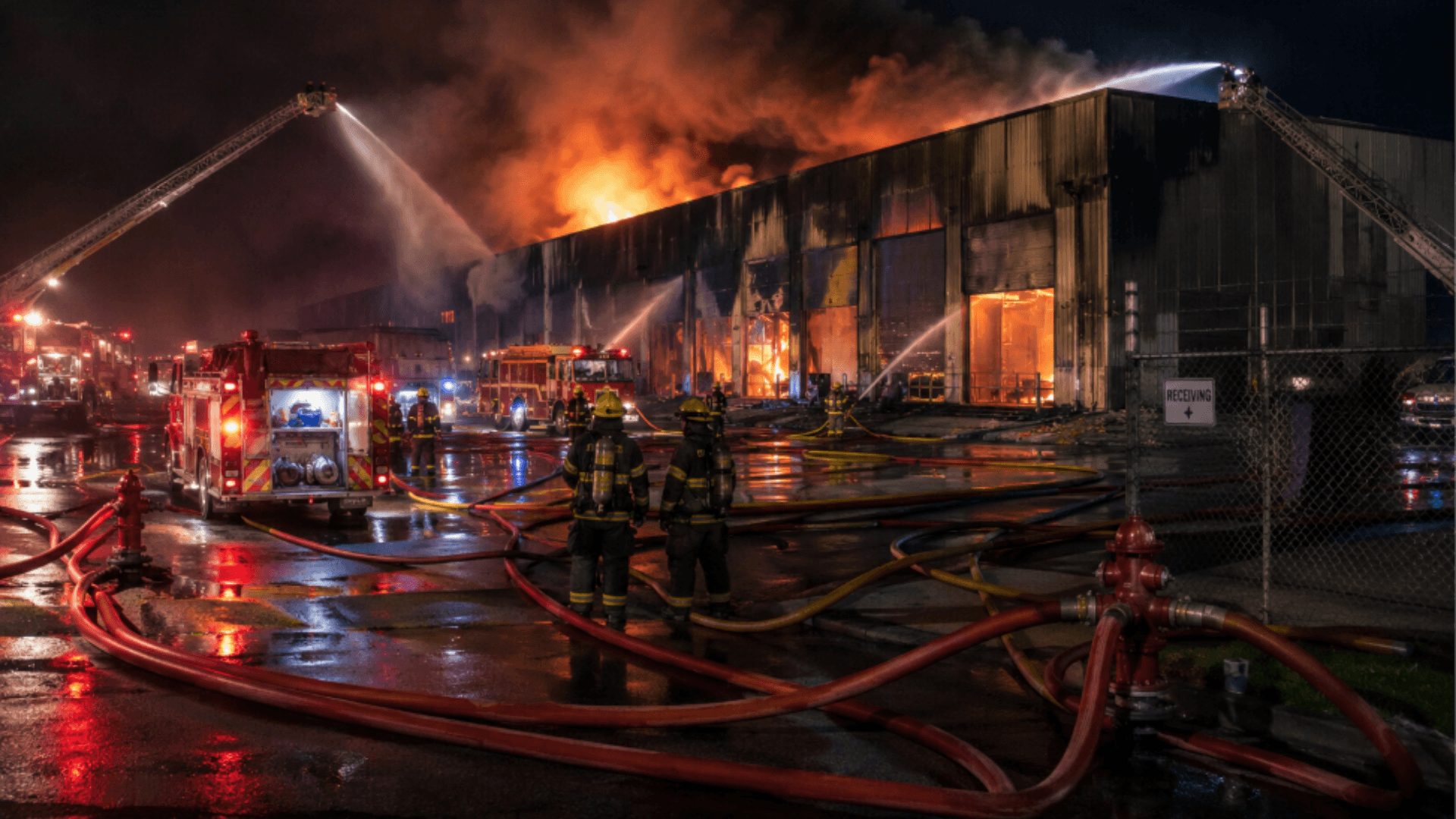
A large warehouse stores inventory worth million. During a nighttime fire:
Sprinklers activate
Fire crews arrive
Multiple hydrants are opened simultaneously
Within minutes, combined water demand exceeds what the local network can deliver. Pressure begins to decline and the suppression effort loses effectiveness at precisely the moment the fire is accelerating.
Designing for a single fire event is no longer enough. Cities must plan for water-stressed fire scenarios.
Why Urban Areas Are Becoming More Vulnerable
Climate Change
Longer drought periods are shrinking available water reserves. Cities worldwide are seeing lower reservoir levels, reduced groundwater availability, seasonal restrictions, and higher temperatures. Every year, water security becomes a bigger factor in emergency preparedness.
Aging Infrastructure
Many water networks were built decades ago. Corroded pipelines, leakage losses, reduced flow capacity, pump station failures, and maintenance backlogs are common. A hydrant installed twenty years ago may not deliver the flow it was rated for today.
Vertical Growth
Modern cities are building upward, and high-rise developments demand greater pressure, larger storage tanks, higher pumping capacity, and more reliable backup systems. As buildings climb, water reliability becomes non-negotiable.
Simultaneous Emergencies
Traditional planning assumes one fire at a time. Real urban environments can face multiple fire events, wildfire-urban interface incidents, infrastructure failures, and utility disruptions together. Future cities need resilience, not just compliance on paper.

What the Data Is Telling Us
Across multiple urban regions, a consistent pattern is emerging:
Water demand is outpacing infrastructure upgrades
Climate-related drought events are becoming more frequent
Urban populations continue to grow faster than networks can scale
Aging water networks lose a meaningful share of supply before it ever reaches consumers
Fire protection engineers increasingly treat water resilience as one of the most consequential long-term risks facing urban fire safety. This is no longer a theoretical concern it is becoming a design consideration on every major project.
What Can Cities and Developers Do?
The answer isn't simply storing more water. The real objective is to reduce how much water a fire requires, speed up response, and build resilient alternative sources.
1. Detect Potential Fire Events Before Ignition
The single most effective way to cut firefighting water demand is preventing a small incident from ever becoming a major one. Modern tools now make this realistic:
AI-powered video analytics
Thermal imaging cameras
Smart smoke detection systems
IoT-enabled fire monitoring
Early warning dashboards
Catching an overheating electrical panel before flames appear can mean the difference between a fire needing 100,000 liters of suppression water and one portable extinguisher handles in seconds.
Earlier detection = smaller fire = less water required.
2. Use Advanced Fire Modelling During Design
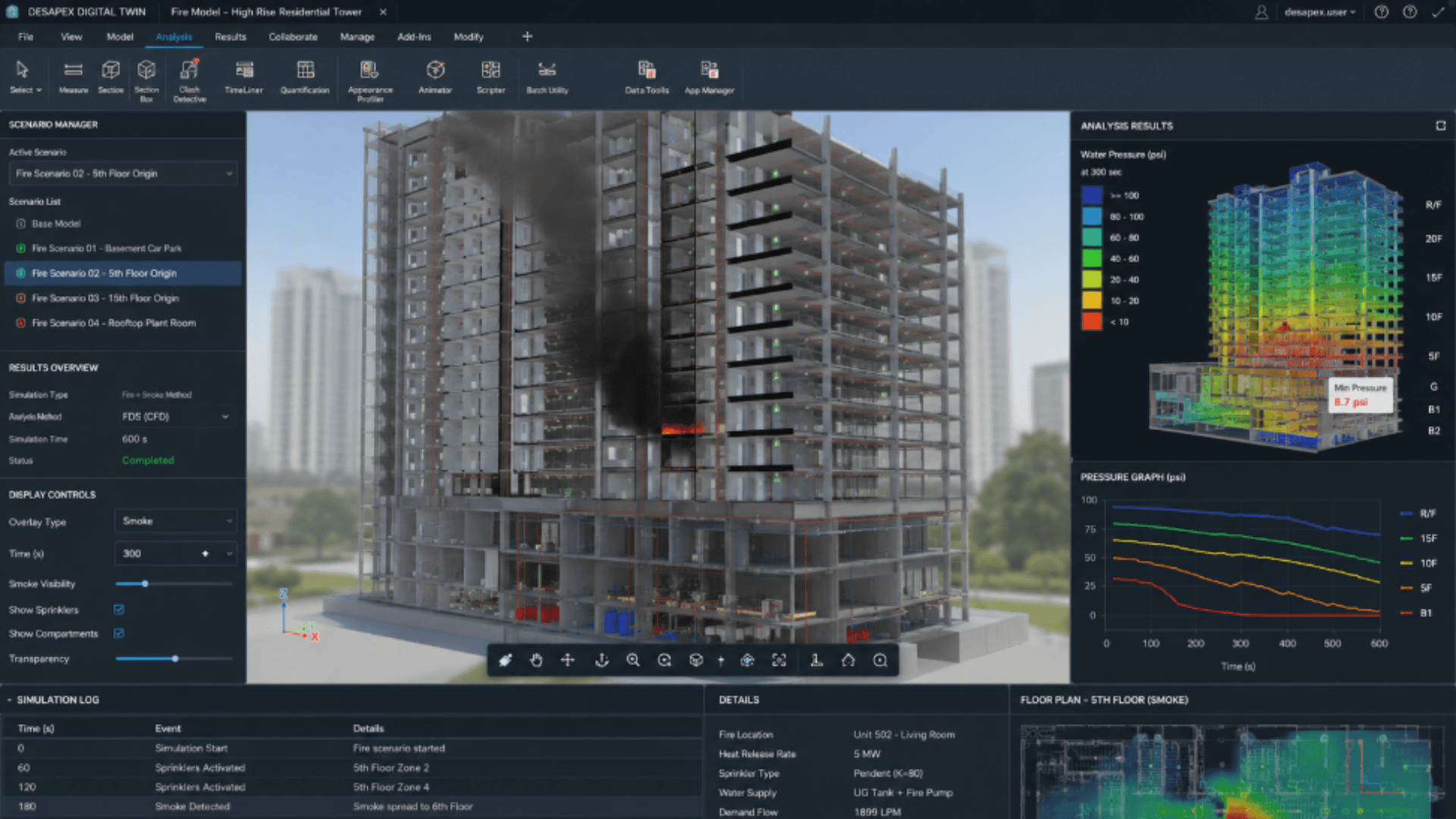
Most buildings are designed assuming ideal conditions. But what happens if water pressure drops, a fire pump fails, or two incidents occur at once? Digital simulation and performance-based fire engineering let designers test these failure modes before a single brick is laid, using tools such as:
Fire Dynamics Simulator (FDS)
Computational Fluid Dynamics (CFD)
Digital Twins
BIM-based Fire Modelling
3. Reuse Treated Water for Firefighting Reserves
One of the most overlooked opportunities lies within facilities that already generate treated wastewater. Modern sewage treatment plants (STPs) can produce high-quality reclaimed water that, after appropriate treatment and disinfection, is free from harmful bacteria, pathogens, and contaminants, and meets the required chemical and microbiological quality standards for its intended non-potable uses. Such water can be safely used for landscape irrigation, cooling tower makeup, road washing, and dedicated firefighting reserves without causing adverse environmental or operational impacts.
Instead of discharging this treated water, developments can store it in dedicated fire-water reservoirs, creating a reliable emergency water source while reducing dependence on municipal supplies. This approach is particularly valuable for large townships, industrial parks, and smart cities seeking to improve water resilience, enhance sustainability, and optimize the use of reclaimed water resources.
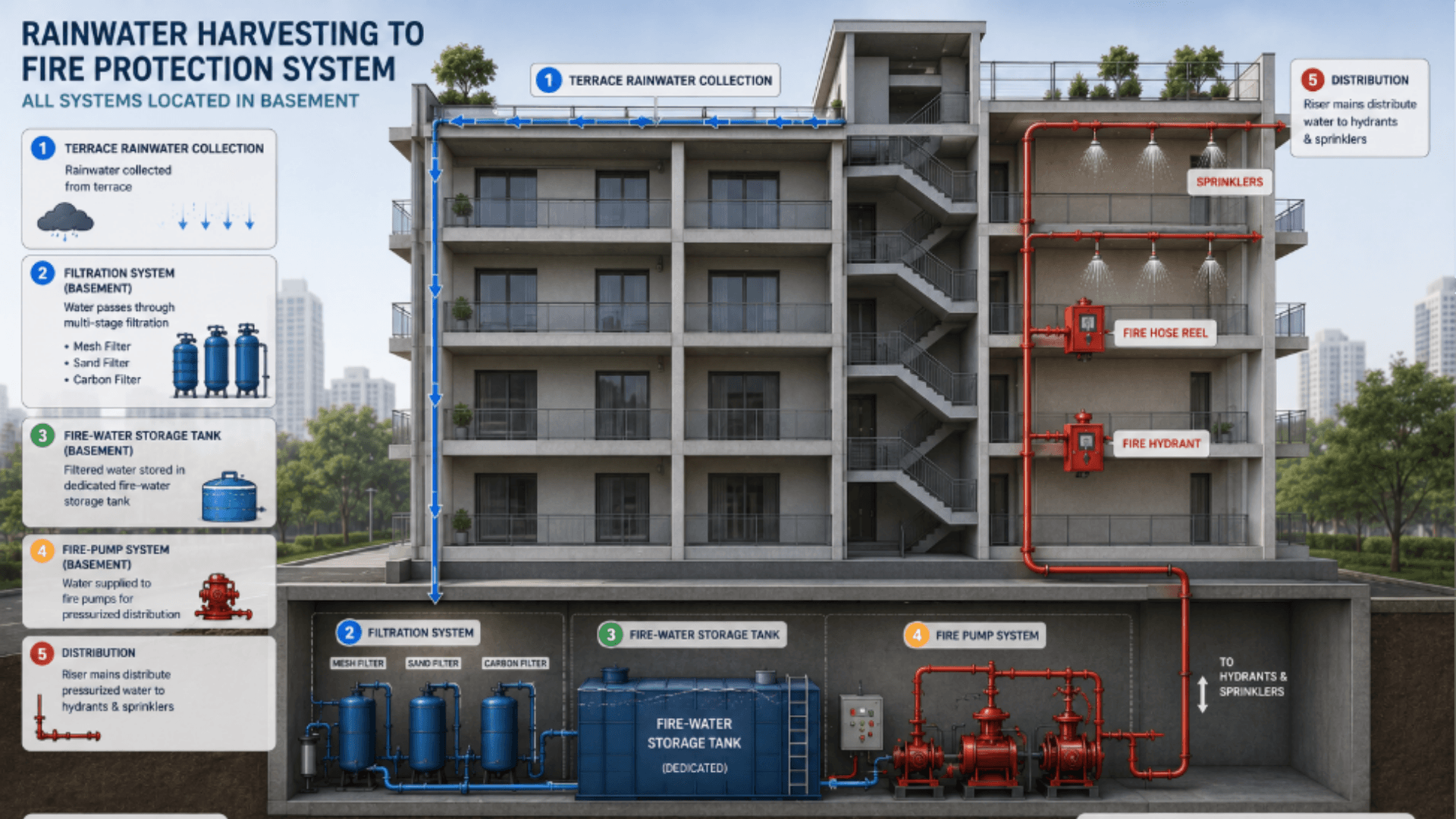
4. Harvest Rainwater as Emergency Fire Water
Urban development’s already collect millions of liters of rainwater every year. With proper treatment and storage, that runoff can feed fire tanks, emergency reservoirs, and backup hydrant networks turning a building's own roof into an additional layer of firefighting resilience.
5. Create Smart Water Networks
Future firefighting systems won't rely solely on static infrastructure. Smart water networks can continuously monitor hydrant pressure, tank levels, pump status, pipeline health, and water quality surfacing real-time alerts so operators can fix deficiencies before an emergency, not during one.
6. Develop Water-Resilient Buildings
Forward-looking buildings are beginning to include dedicated fire-water reservoirs, multiple independent water sources, recycled-water backup systems, smart firefighting controls, and emergency refill connections engineered so a building stays protected even if the municipal supply fails entirely.
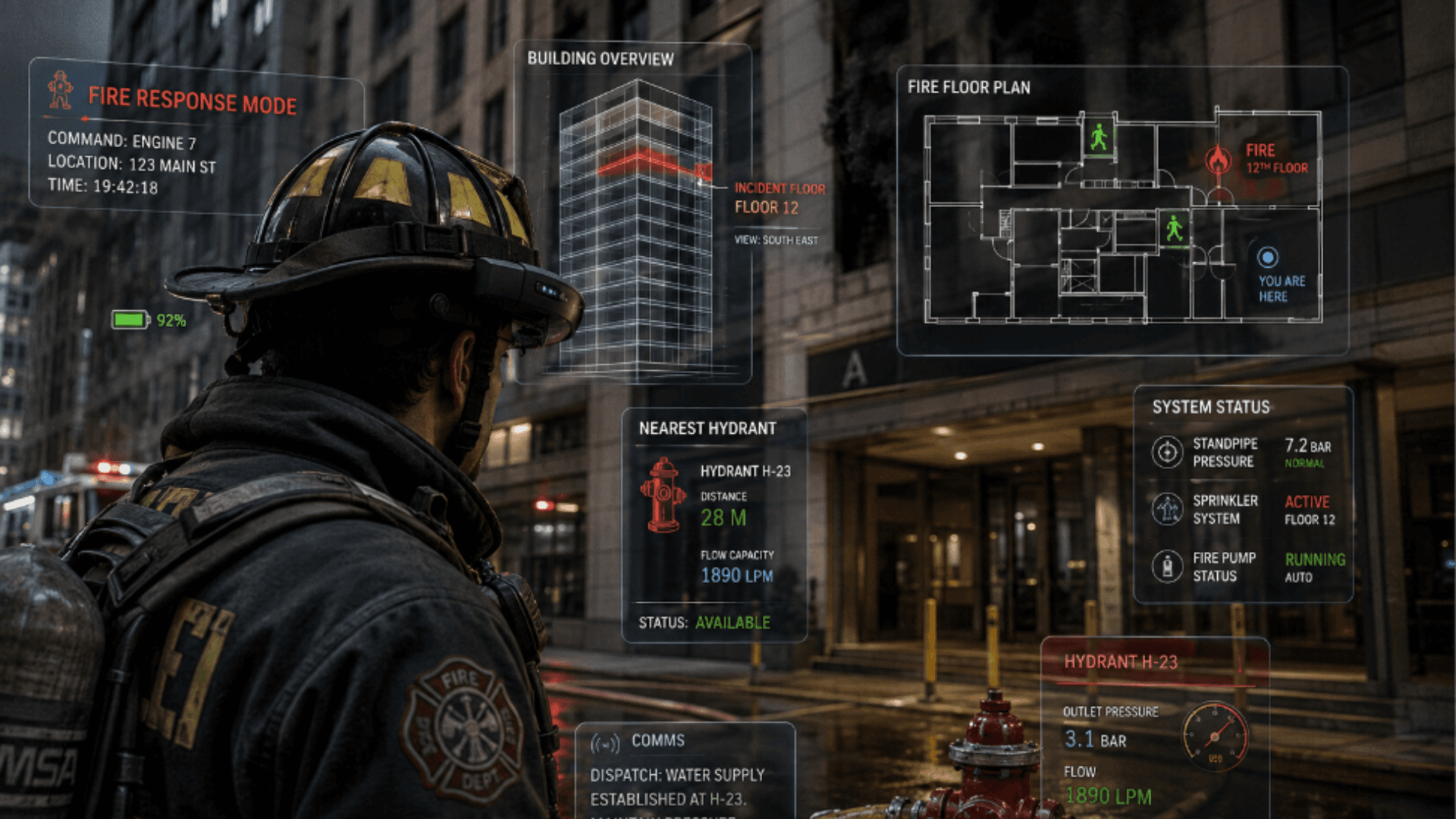
7. Integrate AR and Digital Twin Technologies for Emergency Response
Imagine firefighters arriving on site and instantly seeing through an AR headset connected to a live digital twin available hydrants, remaining tank capacity, fire pump status, safe access routes, and occupancy information. That single layer of information lets responders use whatever water is available far more efficiently, and decide faster when it matters most
The Future: Fighting Fire with Intelligence, Not Just Water
Fire protection has always run on one simple principle: bigger fire, more water. The next era runs on a different one:
Better information = less water required.
Through early detection, predictive analytics, digital twins, treated-water reuse, smart hydrants, and resilient infrastructure, cities can prepare for a future where water is an increasingly precious resource — not by finding more of it, but by using what exists far more intelligently.
Smart Hydrants
Real-time monitoring of pressure, flow, availability, and overall system health.
Digital Twins
Virtual replicas of city water infrastructure, letting planners stress-test emergency scenarios long before they happen.
AI-Powered Risk Prediction
Machine learning models that analyze consumption patterns, infrastructure condition, climate forecasts, and fire risk trends to flag vulnerabilities before they become incidents.
Water Resilience Modelling
Developments increasingly evaluating water security at the design stage not retrofitting it after construction. That single shift will reshape how urban fire protection gets planned.
Final Thought
Urban fire protection has always been about detecting fires faster, responding quicker, and suppressing flames more effectively. A new question is now forcing its way into that conversation:
What happens when the water itself becomes the limiting factor?
The cities that answer this question today will be the ones best prepared for tomorrow's emergencies.
Response time matters. Equipment matters. Training matters. But none of them can replace the one resource every suppression strategy ultimately depends on water.
How Desapex Helps
At Desapex, we help organizations move beyond traditional fire protection planning through digital engineering and simulation-driven decision-making. Our capabilities include:
BIM-based Fire & Life Safety Modelling
Water Infrastructure Visualization
Fire Protection Design Validation
Digital Twin Development
Emergency Scenario Simulation
Hydrant and Fire Water Network Analysis
Infrastructure Resilience Assessment
By enabling stakeholders to model, test, visualize, and validate fire protection strategies before an emergency occurs, we help create safer, more resilient urban environments.
Don't wait for an emergency to expose system weaknesses.
Connect with us to identify vulnerabilities, validate system performance, and strengthen emergency preparedness through digital engineering.