




Operations and Maintenance (O&M) certifications like LEED O&M, BREEAM In-Use, IGBC Green Existing Buildings O&M, and WELL transform building operations into quantifiable assets that enhance cash flows, reduce risks, and unlock market opportunities. Far from symbolic labels, these programs enforce data-driven protocols that yield 15-40% reductions in energy and water use, directly boosting Net Operating Income (NOI). This blog dissects their tangible impacts across financial, strategic, and ESG dimensions, grounded in operational evidence and sector benchmarks.
Operational Shifts from O&M Certification
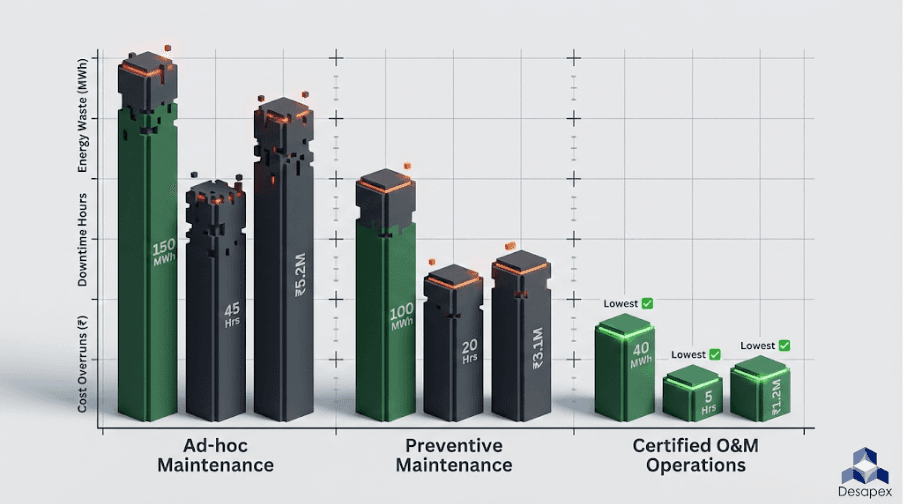
O&M certifications mandate ongoing performance tracking, shifting buildings from reactive fixes to predictive protocols. Daily decisions on setpoints, maintenance schedules, metering, procurement, and audits become auditable, with prerequisites like building-level metering and annual surveys enforcing compliance.
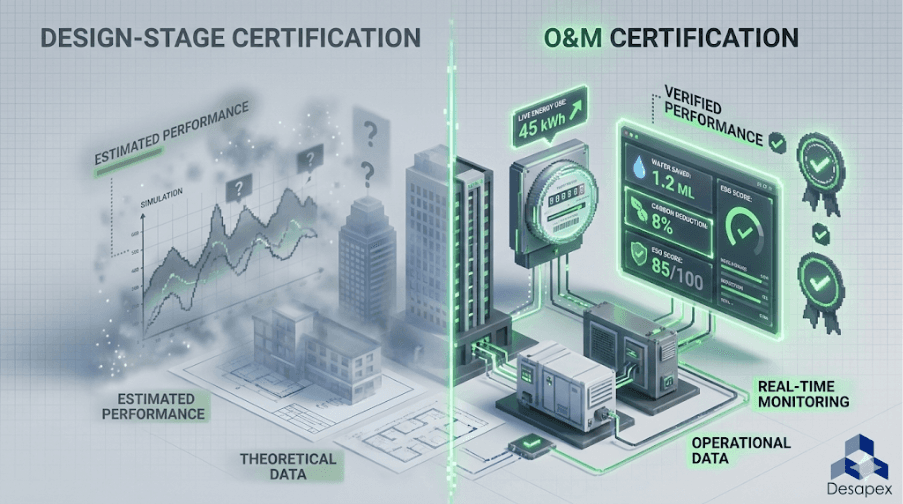
Unlike design-stage certifications (e.g., LEED BD+C), which focus on modelled intent, O&M ratings like LEED v5 O&M or IGBC O&M require 365-day actual data submission for energy, water, waste, and occupant surveys, valid for 3 years with recertification. For instance, LEED O&M's Energy Performance prerequisite demands a minimum score based on metered kWh/sq ft against benchmarks, while IGBC mandates waste segregation at source and rainwater harvesting.
Real examples highlight the contrast: A design-certified office might model 30% energy savings but drift to baseline via setpoint creep; O&M certification caught this in a USGBC case, where retro-commissioning recovered 20% via optimized controls. In India, IGBC O&M projects report 20-30% water savings through fixture audits, avoiding penalties from erratic municipal supply.
Aspect | Design-Stage (e.g., LEED BD+C) | O&M (e.g., LEED O&M, IGBC O&M) |
Focus | Modelled simulations | 12-month metered data |
Maintenance | Optional commissioning | Annual BMPs, waste audits |
Procurement | Material specs | Ongoing policy for 50% green purchases |
Example Savings | Theoretical 25% energy | Actual 15-40% via setpoint/metering |
CAPEX-OPEX Trade-offs
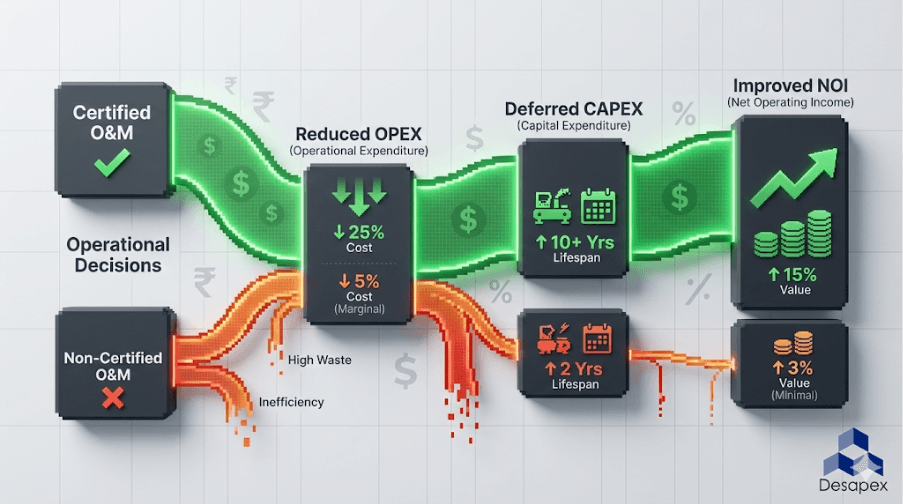
O&M certification defers CAPEX by extending equipment life 20-30% through preventive schedules, avoiding retrofits costing 5-10% of asset value. Unplanned repairs drop 25-50% with fault detection from metering and M&V, while energy penalties from grid demand charges (common in India at ₹8-12/kWh peak) are mitigated by 15-25% via benchmarking.
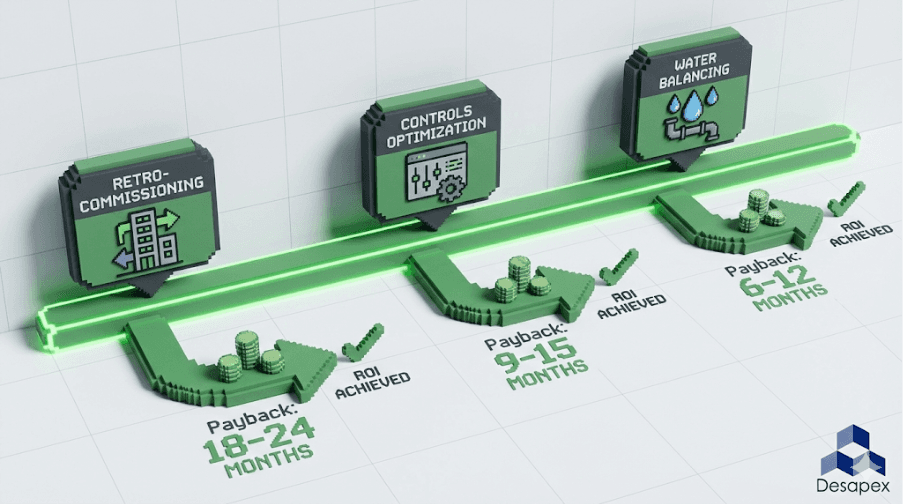
Metering reduces volatility: LEED O&M's prerequisite tracks kBtu/sq ft, enabling controls optimization with 1–3-year paybacks; retro-commissioning yields 10-20% savings, water balancing 15%. IGBC O&M's EPI compliance cuts OPEX 15-40%, with green power credits offsetting 10% via renewables.
Improvement | Typical Savings | Payback Period |
Controls Optimization | 10-20% energy | 1-2 years |
Retro-Commissioning | 15% OPEX | 2-3 years |
Water Balancing | 20-30% water | <1 year |
Preventive Maintenance | 25% repairs | Ongoing |
Quantified: A 1 lakh sq m office at ₹100/sq m/year OPEX saves ₹15-40 lakh annually, deferring ₹50 lakh CAPEX every 5 years.
ROI for Building Owners
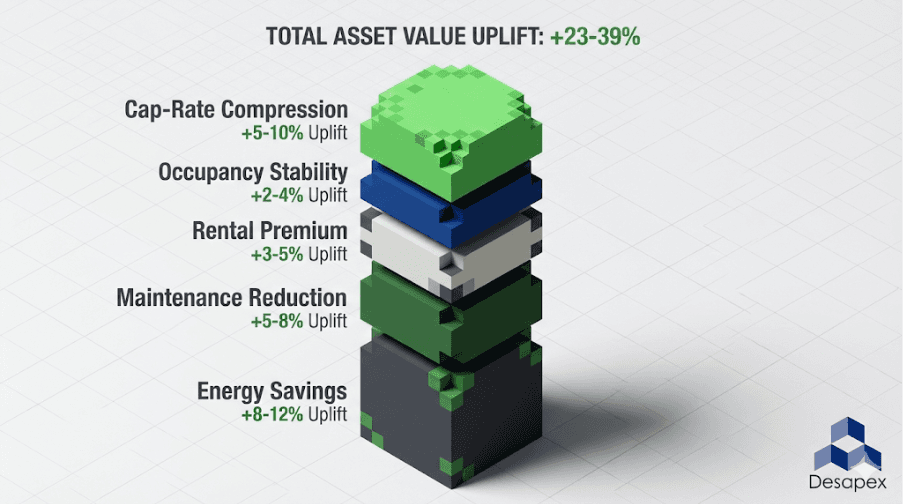
Certified operations uplift asset values 5-20% via cap-rate compression: A stable NOI at 7% cap rate becomes 6%, boosting value 14% (e.g., ₹50 Cr asset to ₹58 Cr). Rentals command 11% premiums, occupancy rises 5-10% from green leases.
Lower risk enhances lender confidence, with green financing at 50-100 bps lower rates; insurance discounts 10-20% for verified low-emission ops. NOI grows 10-25% from 20% OPEX cuts, directly from energy/water metrics.
ESG Disclosure Edge
O&M provides verifiable E metrics: Scope 1/2 cuts 20-34%, carbon intensity via EPI, water 20-30%. S benefits include IAQ via ASHRAE 62.1 compliance, reducing absenteeism 15% and boosting productivity 5-10%.
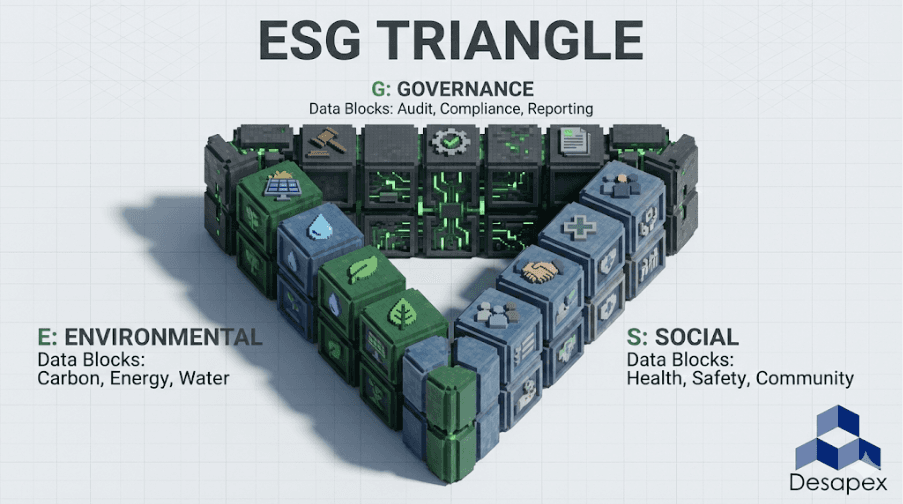
Governance stems from SOPs, traceability in purchasing/waste (e.g., 40+ waste score). Aligns with GRESB (scores up 1-2 pts/year), CDP, BRSR (India), TCFD; avoids greenwashing via third-party audits.
ESG Pillar | O&M Link | Disclosure Impact |
Environmental | Metered Scope 1/2 | GRESB/CDP compliance |
Social | IAQ surveys | WELL integration |
Governance | Annual audits | BRSR traceability |
Market and Strategic Gains
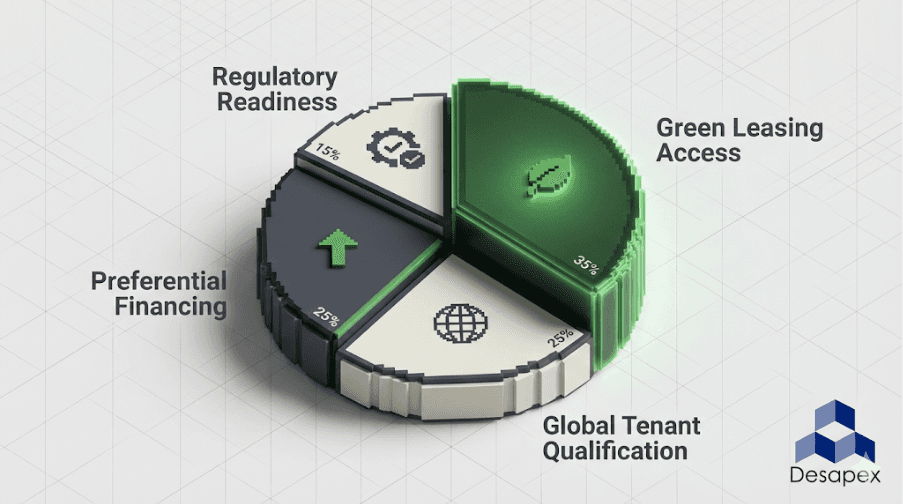
Certified ops qualify for MNC green leases (e.g., 75% GRESB threshold), unlocking IT park premiums in India. Green loans offer 20-50 bps savings, tied to performance KPIs.
Future-proofs against ECBC tightening, India's net-zero mandates by 2070.
Corporate Edge for Owner-Occupiers
Boards gain confidence from auditable 15-40% savings aligning net-zero roadmaps. Attracts talent: 70% prefer green offices, reducing turnover 10%. Operational data trumps design for ESG credibility.
India-Specific Insights
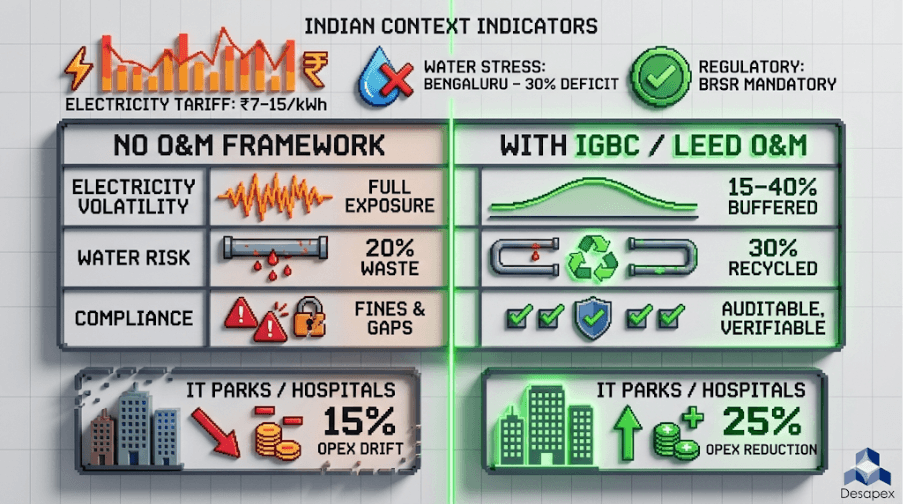
With tariffs ₹7-15/kWh and water stress (Bengaluru deficits 30%), O&M mitigates via 20-30% savings, regulatory flux (BRSR mandatory). IT parks/hospitals see 25% OPEX cuts vs. 15% doing nothing.
Certification Fit Criteria
Prioritize for assets >10 years, high-occupancy offices/IT (ROI <3 years); portfolios scale via benchmarks. Skip if <5 years old or low utilization focus audits first. Tenant-led if occupier-driven ESG.
Partnering with Desapex for O&M Success
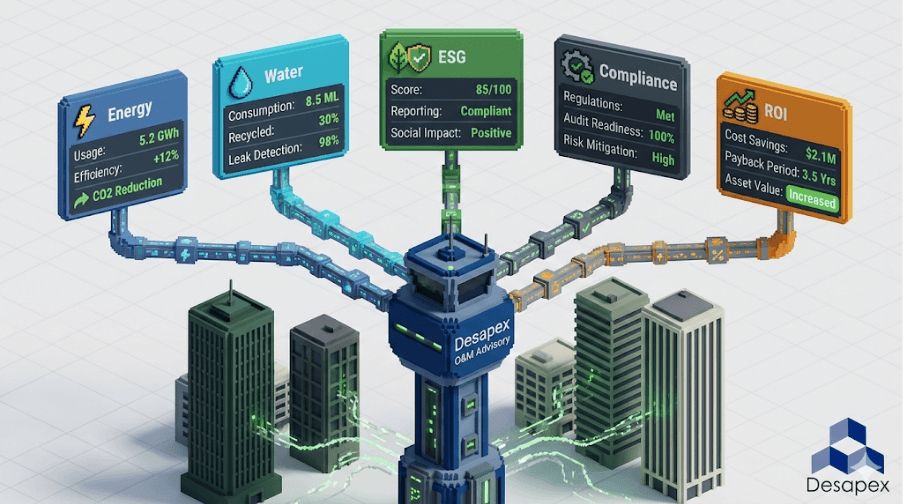
Desapex delivers end-to-end O&M certification services tailored to Indian commercial assets like IT parks and campuses, leveraging expertise in Energy simulation, LCA, EPDs, and BIM integration. Asa sustainability consultancy, Desapex conducts gap assessments against IGBC/LEED O&M prerequisites, implements metering and M&V via IES VE, Prodikt LCA and handles 12-month data submissions for 20-40% OPEX reductions.
The firm supports retro-commissioning, SOP development, and GRESB/BRSR reporting, achieving 15-30% energy savings in probation-phase projects while aligning with client net-zero goals. For portfolios, Desapex scales via BIM-LCA workflows, offering ROI modelling (1–3-year paybacks) and green lease clause integration, positioning clients for MNC tenants and sustainability-linked financing.
Engaging Desapex mitigates regulatory risks, with proven workflows, ensuring auditable ESG disclosures without greenwashing.