

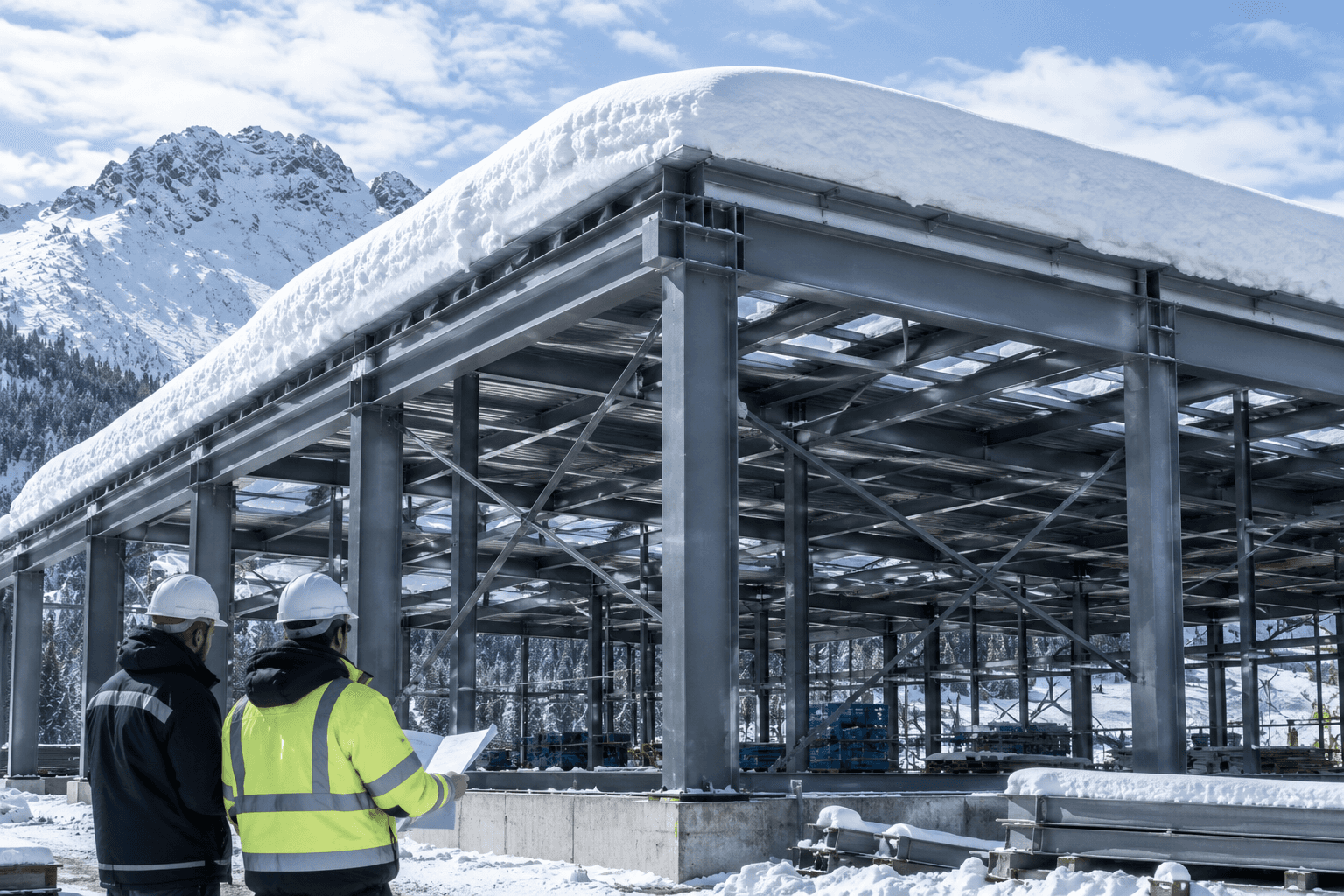
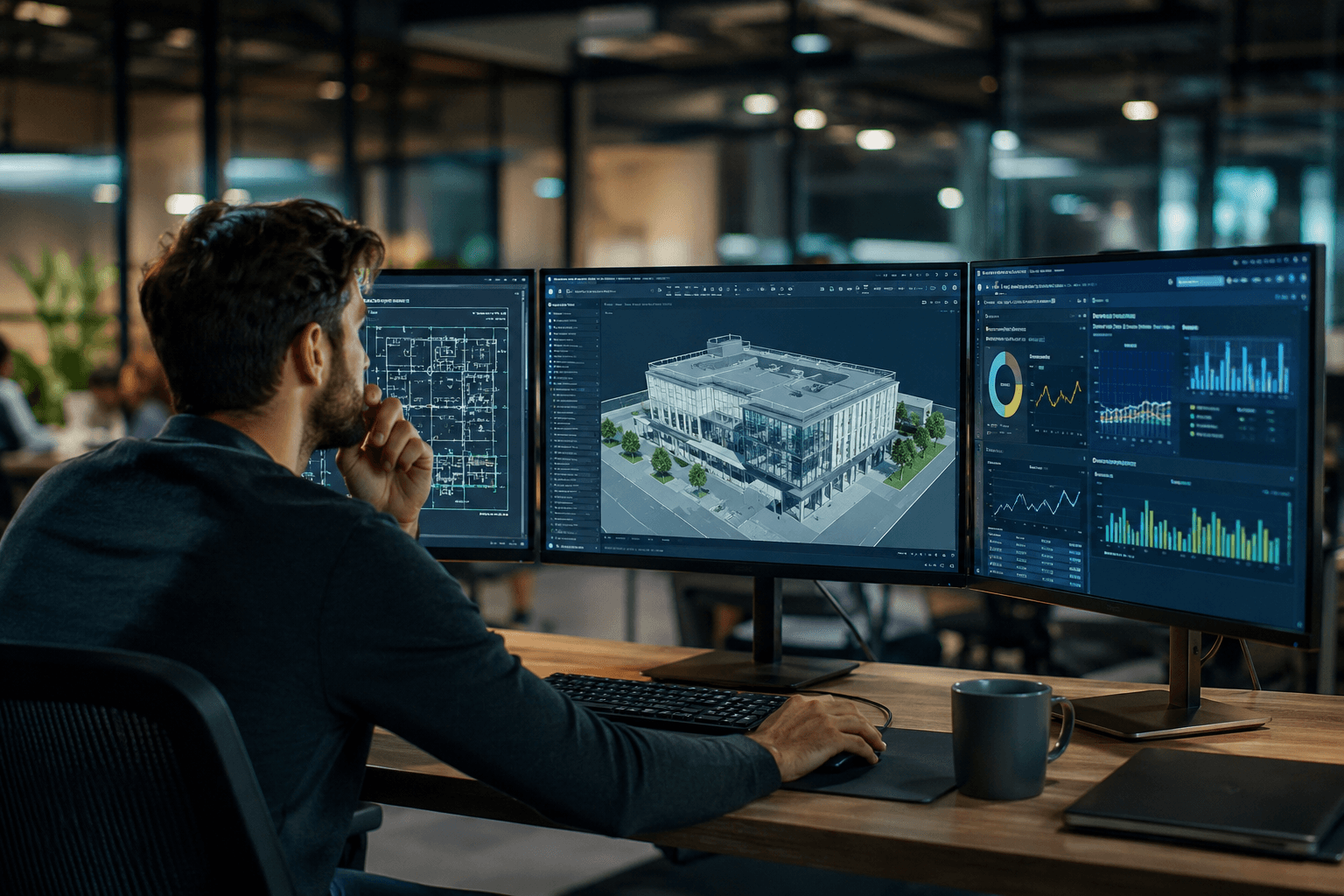

Data centers are the backbone of modern digital infrastructure, supporting cloud computing, AI workloads, financial systems, and mission-critical operations across the globe. In Europe, especially in Nordic regions such as Finland, Sweden, Norway, and Denmark, data center development is accelerating due to favorable climate conditions, renewable energy access, and stable infrastructure.
However, designing data centers in these regions presents significant structural engineering challenges.
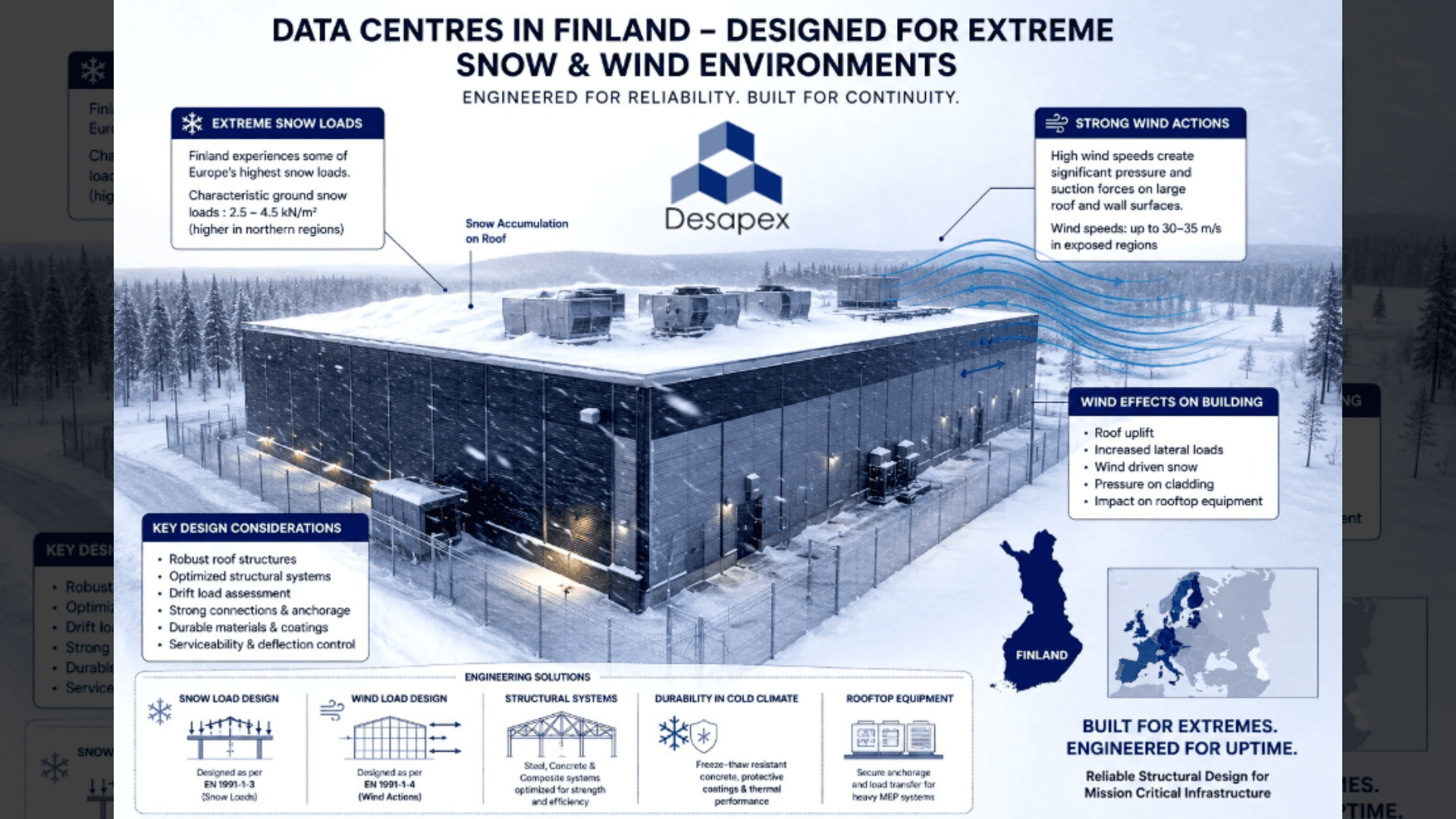
Unlike conventional buildings, data centers demand exceptional structural reliability, strict serviceability performance, and resilience under extreme environmental conditions. Structural engineers must design facilities capable of handling high equipment loads, complex MEP integration, severe snow accumulation, extreme wind conditions, freeze-thaw exposure, and long operational lifespans.
For structural engineers, the challenge is not only designing a safe structure but delivering one that is highly efficient, cost-optimized, and future-ready
When Structural Failure Means Operational Failure
Imagine a hyperscale data center in Finland during peak winter.
Outside temperatures drop below -25°C. Heavy snow accumulates across large-span roof structures. Wind-driven snow drifts create uneven loading near rooftop mechanical units. Inside the facility, thousands of servers generate continuous heat while cooling systems operate at full capacity.
The structure must simultaneously resist:
Heavy snow loads
High wind suction
Equipment vibration
Thermal differentials
Dynamic MEP loads
Even minor structural underperformance can result in:
Roof deflection affecting MEP systems
Cracking in slabs supporting server racks
Vibration issues in equipment zones
Increased maintenance costs
Operational disruptions
In data centers, structural performance directly impacts business continuity.
Understanding the Core Problem
Data centers are structurally demanding because they combine high load intensity with environmental complexity.
Unlike standard buildings, data centers require structural systems that support:
Large column-free spans
Heavy rooftop equipment
High floor loading
Tight deflection control
Long-term durability
In Finland and surrounding regions, these challenges become more severe due to harsh climate conditions.
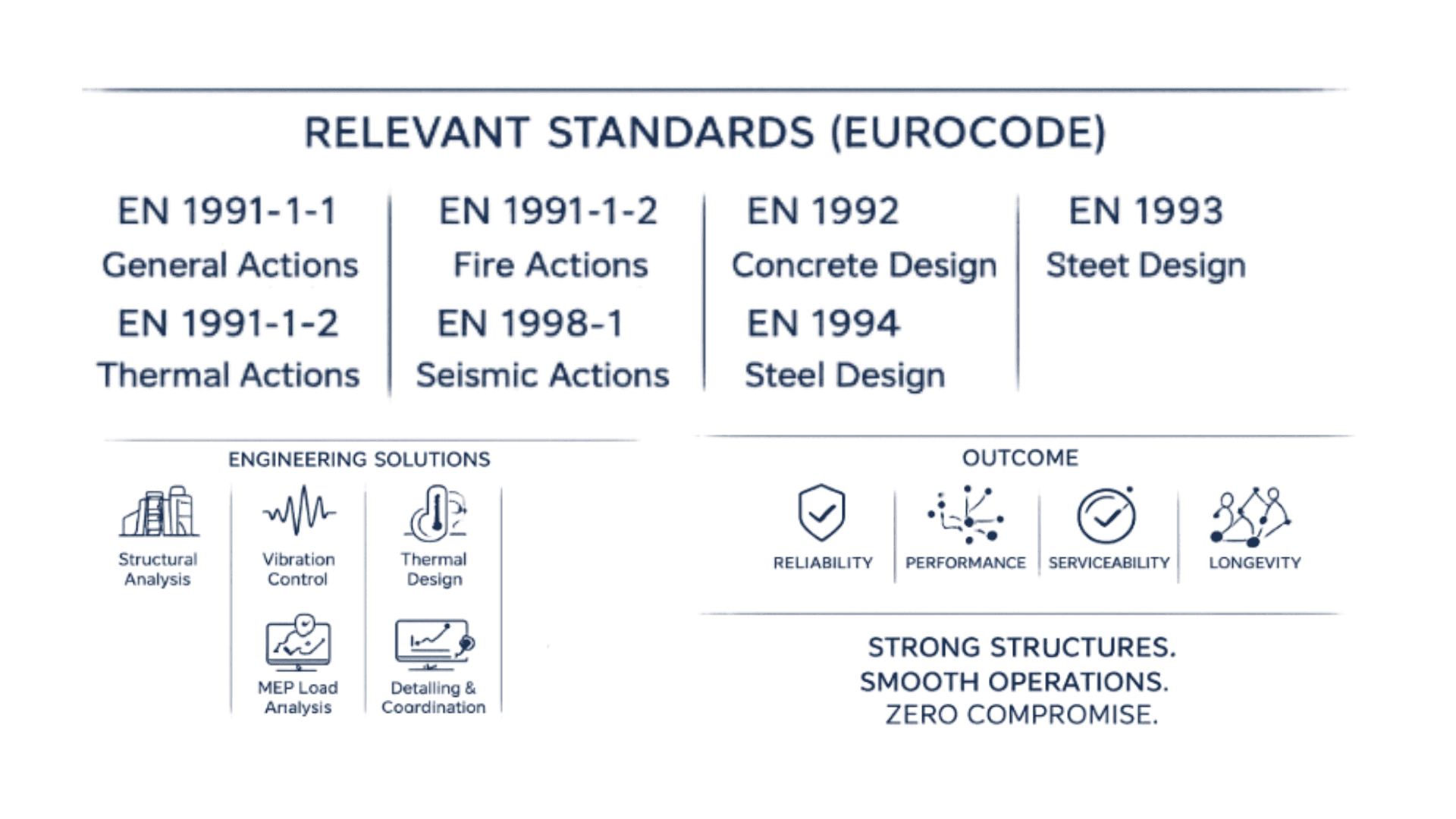
Major structural design drivers include:
Snow load (EN 1991-1-3)
Wind load (EN 1991-1-4)
Thermal action (EN 1991-1-5)
Seismic action (EN 1998)
Concrete design (EN 1992)
Steel design (EN 1993)
Composite design (EN 1994)
The engineering challenge is balancing resilience and optimization.
Engineering Challenges and Solutions
1. Extreme Snow Loads on Roof Structures
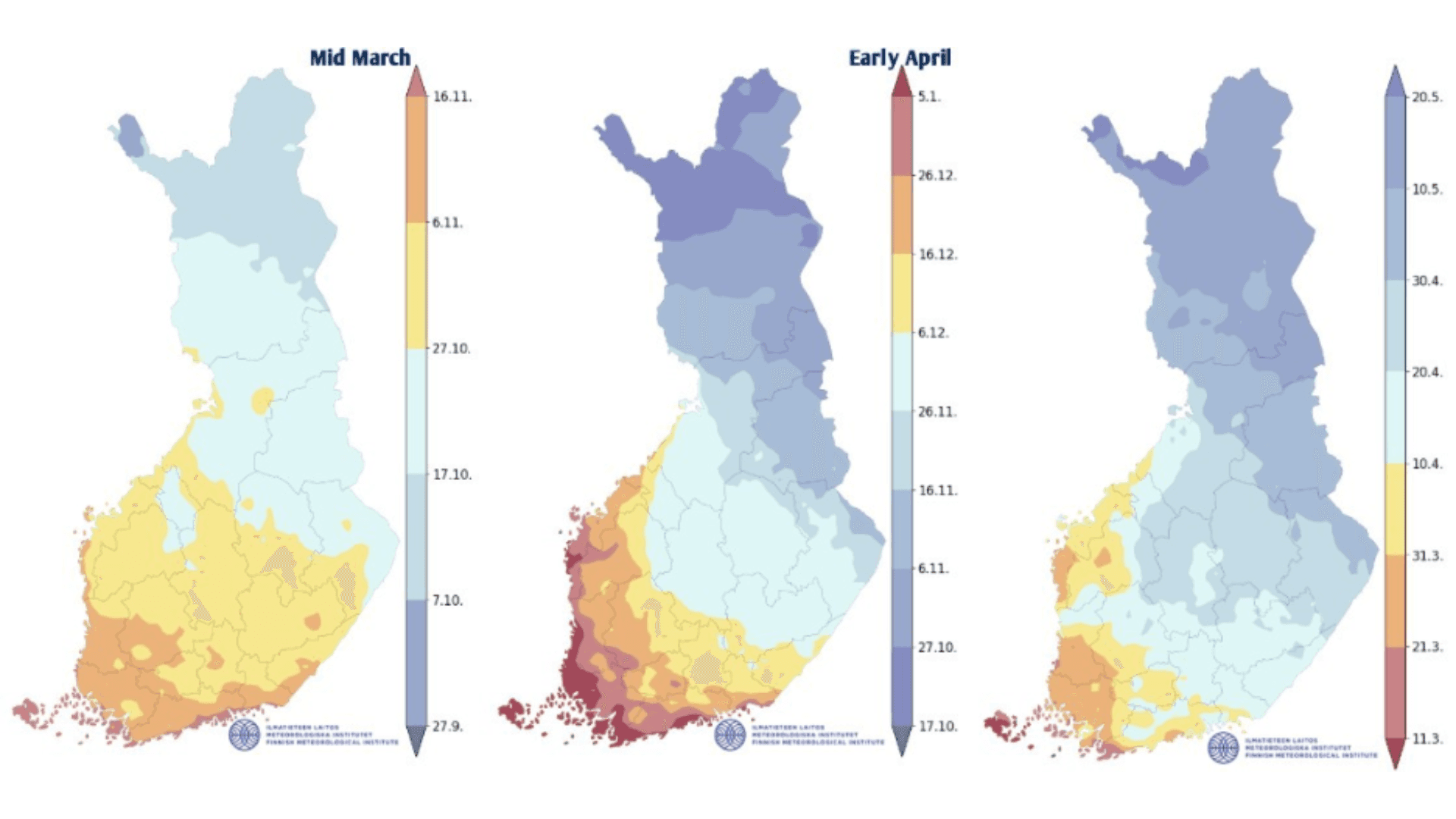
The Nordic region experiences some of Europe’s highest snow loads.
In Finland, characteristic snow loads can exceed:
2.5–4.5 kN/m² in many regions
Higher in northern areas and special topographies
Large-span roofs in data centers are highly sensitive to snow loading.
Major risks include:
Roof deflection
Beam overstress
Connection failure
Ponding effects during thaw cycles
Engineering Solution
At Desapex, detailed design involves:
Snow drift analysis
Multiple load combination checks
Advanced finite element modelling
Serviceability and ultimate checks
Roof systems are optimized using:
Composite steel beams
Long-span trusses
Hybrid framing systems
Relevant Eurocode:
EN 1991-1-3 (Snow Loads)
2. Wind Loads and Roof Uplift Effects
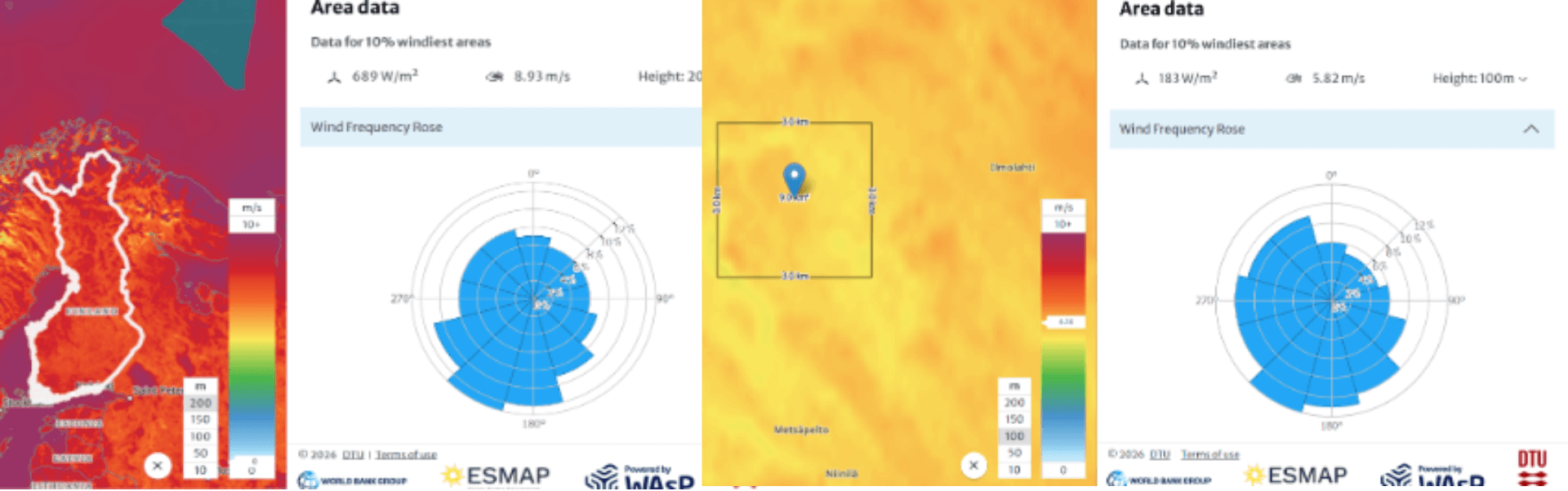
Large data center roofs are highly vulnerable to wind uplift.
In open Nordic terrains and coastal zones, strong winds generate significant suction pressures.
Critical risk areas include:
Roof edges
Corners
Rooftop plant zones
Cooling tower foundations
Wind can also intensify snow drift formation.
Engineering Solution
Desapex performs:
Wind pressure analysis
Uplift checks
Stability analysis
Cladding support design
Structural optimization includes:
Increased roof diaphragm stiffness
Enhanced bracing systems
Improved anchorage design
Relevant Eurocode:
EN 1991-1-4 (Wind Actions)
3. Heavy Equipment and Concentrated Operational Loads
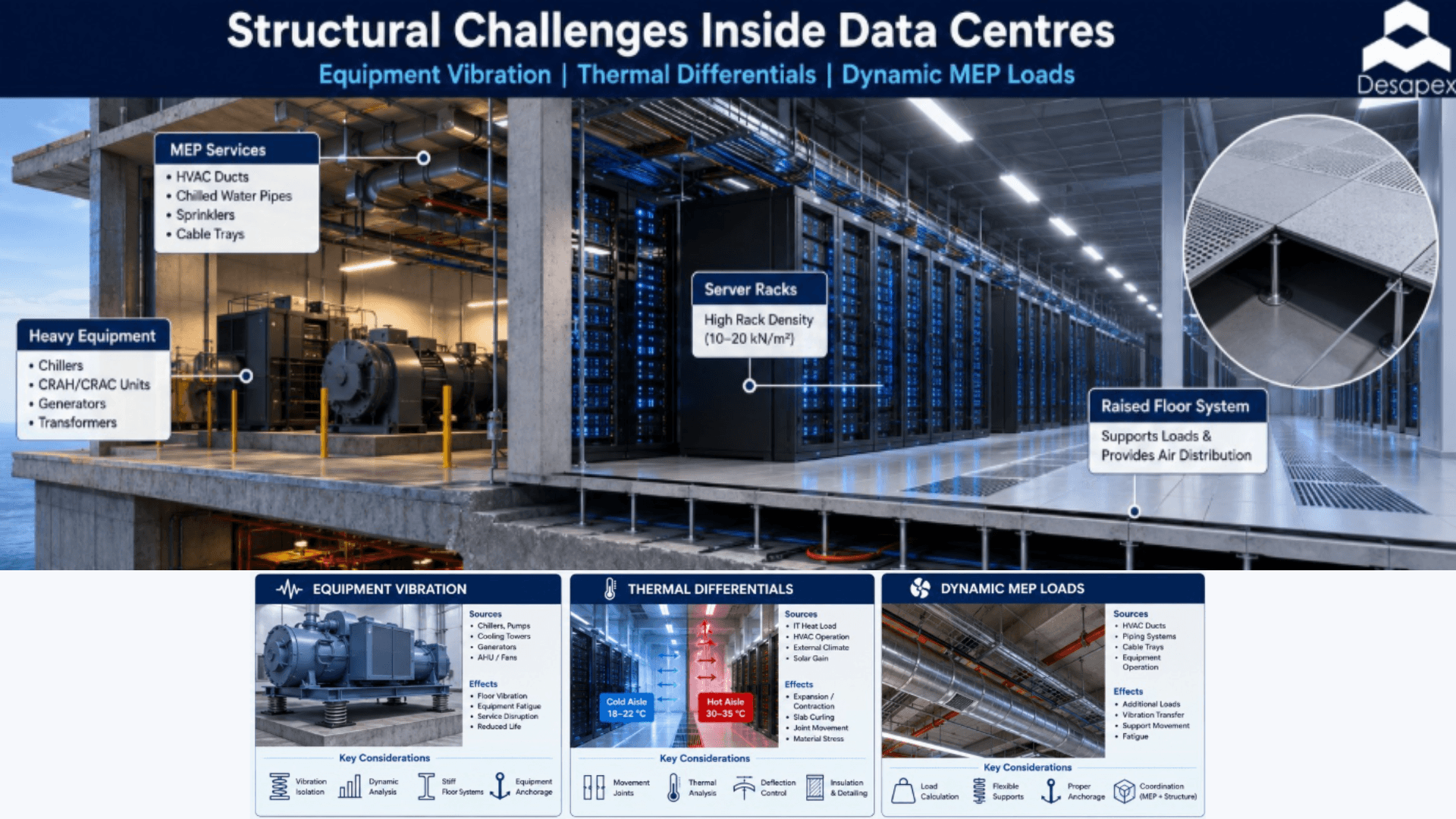
Data centers contain heavy operational systems such as:
Server racks
UPS systems
Battery rooms
Cooling equipment
Transformers
These generate substantial concentrated loads.
Typical loading ranges:
Server zones: 12–20 kN/m²
Battery rooms: 15–25 kN/m²
MEP plant rooms: highly localized heavy loads
Challenges include:
Punching shear
Slab deflection
Settlement sensitivity
Engineering Solution
Desapex detailed design focuses on:
Load mapping
Equipment load transfer paths
Punching shear checks
Dynamic response analysis
Optimized systems include:
PT slabs
Composite decks
Reinforced raft foundations
Relevant Eurocodes:
EN 1991-1-1
EN 1992-1-1
4. Steel Behavior in Extreme Cold Climate
Steel behaves differently under low temperatures.
Challenges include:
Reduced ductility
Brittle fracture risk
Thermal contraction
Connection stress concentration
In Nordic winter conditions, exposed steel structures require careful detailing.
Engineering Solution
Desapex selects:
Appropriate steel grades
Cold-resistant connection detailing
Optimized welding specifications
Protective systems include:
Anti-corrosion coatings
Fire protection systems
Thermal insulation
Relevant Eurocode:
EN 1993-1-10
5. Concrete Durability Under Freeze-Thaw Cycles
Concrete structures in Finland face repeated freeze-thaw cycles.
This can lead to:
Surface scaling
Crack formation
Moisture ingress
Reinforcement corrosion
Critical zones include:
Foundations
External slabs
Plinth beams
Retaining structures
Engineering Solution
Desapex detailed design uses:
Durable concrete mixes
Low permeability concrete
Air-entrained concrete
Proper cover design
Additional protection includes:
Waterproof membranes
Drainage systems
Chemical-resistant coatings
Relevant Eurocodes:
EN 1992
EN 206
6. Seismic Considerations for Equipment Stability
Finland is a low seismic zone, but seismic design cannot be ignored for mission-critical infrastructure.
Data centers require protection not only for structural elements but also for sensitive equipment.
Challenges include:
Equipment anchorage
Rack stability
MEP restraint systems
Engineering Solution
Desapex evaluates:
Structural seismic response
Equipment anchorage
Non-structural component stability
Design includes:
Seismic bracing
Equipment restraint systems
Flexible utility connections
Relevant Eurocode:
EN 1998
Why Location Matters: The Finland Example
Structural design for a data center in Helsinki differs significantly from one in Southern Europe.
For example, in Southern Europe:
Snow load is lower
Thermal freeze-thaw effects are less severe
Cooling loads differ
In Finland:
Snow governs roof design
Freeze-thaw governs durability
Wind and thermal actions heavily influence detailing
At Desapex, this regional difference becomes critical during detailed design.
A data center in Helsinki demands significantly different structural strategies compared to facilities in warmer European regions.
Key design priorities shift toward:
Roof robustness
Thermal resilience
Durable materials
Optimized structural efficiency
This is why location-specific structural design is essential.
Expert Insight and Industry Best Practices
Modern data center structural engineering relies on:
Finite Element Analysis (FEA)
BIM coordination
Digital twins
Load optimization studies
Performance-based design
Best practices include:
Early structural-MEP coordination
Optimized grid planning
Composite structural systems
High-performance coatings
Lifecycle durability planning
These improve:
Structural reliability
Material efficiency
Cost performance
Operational resilience
What Should Companies Do Next?
Organizations developing data centers in Nordic Europe should:
Perform Detailed Structural Assessments
Assess environmental and operational load requirements early.
Optimize Material Selection
Choose steel, concrete, and composite systems based on lifecycle performance.
Improve Durability Planning
Prioritize freeze-thaw resistance and corrosion protection.
Focus on Serviceability
Control deflection, vibration, and movement for sensitive equipment.
Follow Eurocode and National Annex Requirements
Ensure compliance with Finnish and European standards.
The Next Generation of Data Center Structural Engineering
The future of data center engineering is driven by efficiency and resilience.
Emerging trends include:
AI-driven structural optimization
Digital twin monitoring
Modular construction
Low-carbon concrete
Hybrid steel-composite systems
Smart structural health monitoring
These innovations enable faster delivery, lower costs, and better performance.
Engineering for Continuous Uptime
Data centers demand more than conventional structural design.
In Finland and across Northern Europe, structural engineers must design for extreme snow, wind, thermal effects, and heavy operational loads all while maintaining strict performance requirements.
Success in data center structural engineering is measured not only by strength, but by resilience, efficiency, and operational continuity.
The best structural system is one that performs reliably under the harshest conditions while supporting uninterrupted digital operations.
How Desapex Helps
At Desapex, we deliver advanced structural engineering solutions for mission-critical data center infrastructure across Europe and global markets.
Our expertise includes:
Structural analysis and design
Hyperscale data center engineering
Eurocode-compliant detailed design
BIM coordination
Material optimization
Structural resilience consulting
From concept to detailed engineering, Desapex helps clients deliver safe, efficient, and future-ready data center structures built for the world’s most demanding environments.