


Imagine you're standing in an open field on the outskirts of a rapidly growing tech hub. The air is still, but the potential hum of servers, routers, and chilled air fills your imagination. This bare land may soon become a high-performance colocation hub or a hyperscale data center, but only if you get one thing right technical due diligence.
Before the first cable is laid, before a single line is drawn in Revit or AutoCAD, there's a phase of the project that feels invisible yet defines everything that follows. It’s the quiet, often overlooked hero of successful data center development: Technical Due Diligence (TDD).
Let’s unfold this story not as a checklist, but as a narrative that explores why it matters, how Desapex brings it to life, and the real value it delivers.
What is Technical Due Diligence?
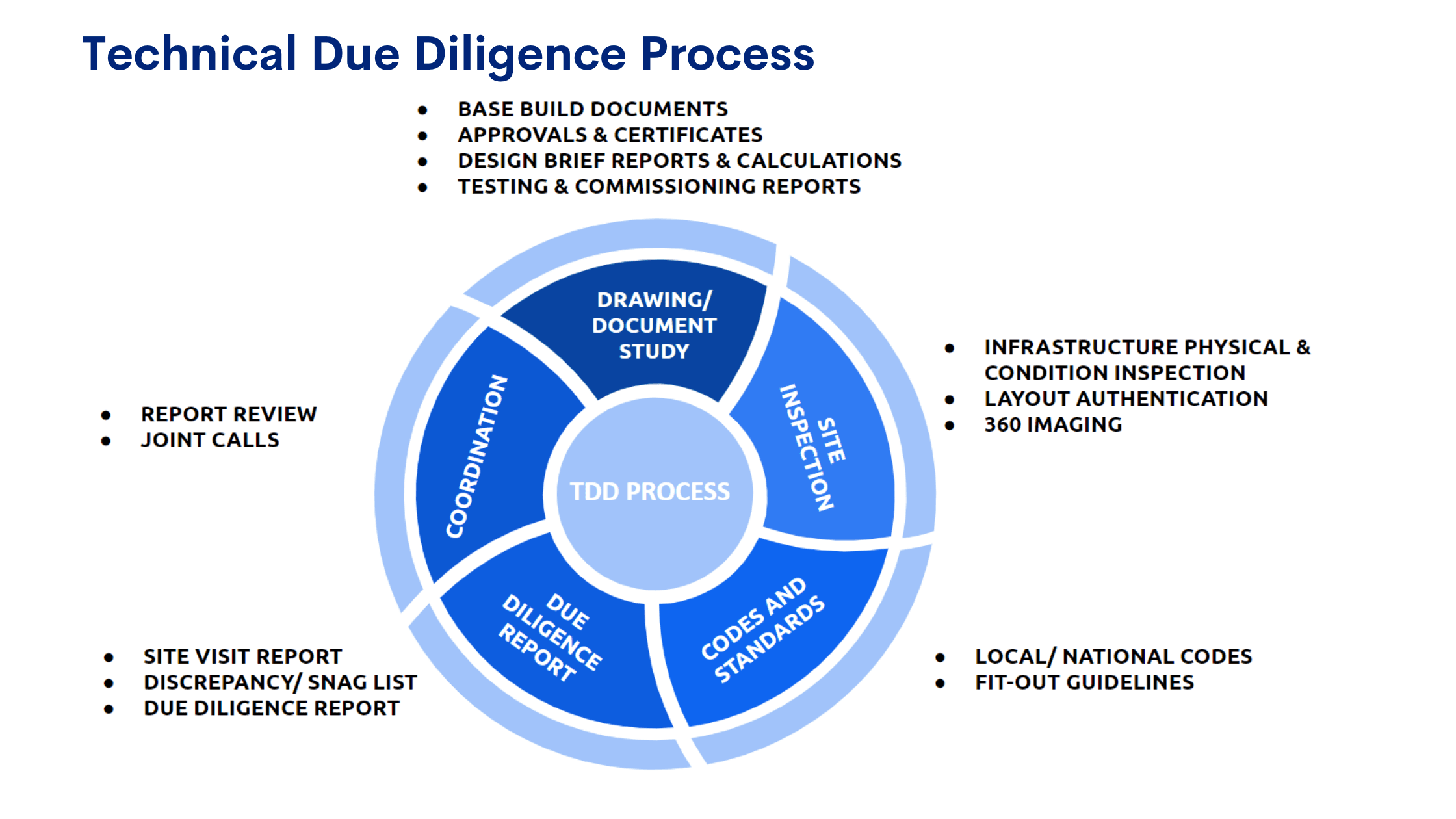
Technical due diligence is a systematic, multi-disciplinary assessment that ensures a site is viable environmentally, legally, technically, and operationally for a data center. It involves investigating everything from power and fiber access to environmental risks, cooling feasibility, and land ownership.
It’s not just a checkbox exercise. It’s a lens through which investors, developers, and operators view risk and make confident, informed decisions.
Why It Matters for Data Center Projects
Think of a data center like a living organism. Its ability to survive and thrive depends on its ecosystem power, connectivity, cooling, land, security, compliance, and scalability.
Missing even one critical detail in the due diligence phase can create massive downstream costs, regulatory delays, or even project failure. It’s why some of the biggest names in hyperscale only shortlist sites after rigorous due diligence not before.
At Desapex, we’ve seen it all. From projects derailed due to lack of soil reinforcement plans to last-minute fire code rejections. With the rise in edge computing, AI workloads, and hyperscale demand, the stakes have never been higher.
The Blueprint of Certainty: Your Technical Due Diligence Essentials
Before a single design is drafted or a foundation stone is laid, there’s a framework that quietly shapes the entire future of your data center project, the technical due diligence checklist.
This isn’t just a set of tasks; it’s a diagnostic map that helps you spot risks, validate potential, and make confident decisions. It ensures your vision is backed by ground reality technically, legally, and environmentally.
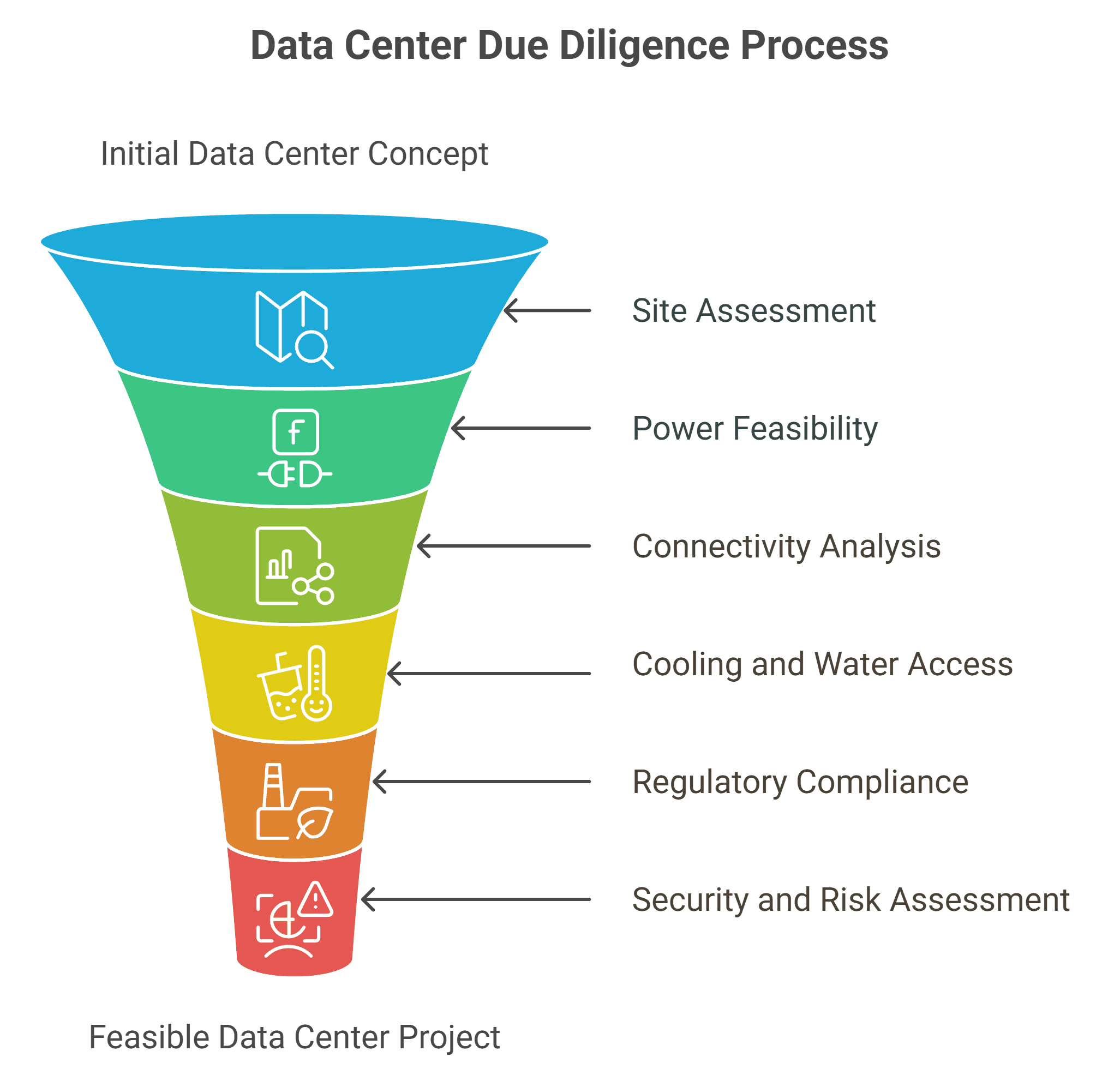
To bring clarity and confidence to your decision-making, you need a structured and comprehensive approach technical due diligence for data centers as follows:
1. Site & Land Assessment
Land title and ownership verification
Zoning and land-use compliance
Soil investigation and bearing capacity
Topographic survey
Flood zone and seismic risk assessment
Expansion potential and site accessibility
2. Power Feasibility
Distance to nearest substation (e.g., 132 kV)
Power availability and grid reliability
Renewable energy potential (solar/wind)
Generator backup feasibility and emission norms
Electrical load projections and redundancy planning
3. Connectivity & Fiber
Proximity to metro/dark fiber networks
Number of fiber providers
Fiber entry paths and points of presence (PoPs)
Redundant routing for uptime assurance
Future-proofing for higher bandwidth requirements
4. Cooling & Water Access
Water source (municipal, borewell, etc.)
Cooling strategy (air-cooled, water-cooled, hybrid)
PUE targets and energy efficiency benchmarks
Rainwater harvesting and water recycling potential
Impact of climate and ambient conditions
5. Regulatory & Environmental
EIA (Environmental Impact Assessment) clearance
Fire NOC and related permits
Building code and height restrictions
Emission, noise, and waste management compliance
Legal disputes or environmental encumbrances
6. Security & Location Risk
Site neighborhood assessment (industrial, residential, etc.)
Crime rate and civil unrest history
Proximity to high-risk zones (chemical plants, airports)
Site boundary and access control feasibility
Natural disaster vulnerability (floods, earthquakes)
7. Design & Build Feasibility
MW-per-acre density projection
Modular construction support
Space planning for chiller yards, substations, etc.
Accessibility for logistics and heavy equipment
Phased development possibilities
How Desapex Helps Create Your Technical Due Diligence Checklist
At Desapex, we don’t just hand you a checklist. We co-create a tailored technical due diligence framework that aligns with your site location, business goals, and technology roadmap.
Here’s how we do it:
Collaborative Site Walkthroughs with our digital engineering experts.
Customized Checklists built for your specific data center tier, scale, and regional context.
3D Visualization using BIM to evaluate site constraints, layouts, and utility access.
Automated Risk Reports that highlight potential red flags before they snowball into delays.
Integration with Environmental & Compliance Audits using our in-house sustainability team.
We turn fragmented data into actionable insights and uncertainties into clarity.
know more about "How to Conduct a Technical Due Diligence of Property"
Benefits of Technical Due Diligence in Data Center Projects
Risk Mitigation: Identify red flags early from zoning laws to flood risks.
CapEx Optimization: Avoid unnecessary design revisions or rework due to overlooked constraints.
Regulatory Compliance: Fast-track permits by being fully prepared for authority reviews.
Sustainability Alignment: Ensure water, power, and cooling plans support green certifications.
Future Scalability: Design for today’s needs but prepare for tomorrow’s demands.
Investor Confidence: A solid due diligence report builds trust with stakeholders and funding bodies.

Final Word: Build Smarter, Start Sooner
Great data centers don’t start with groundbreaking ceremonies. They start with questions hard, detailed, uncomfortable ones.
At Desapex, we believe technical due diligence isn’t just a task, it's a mindset. One that blends engineering precision with business foresight. And if done right, it becomes your most powerful competitive advantage.
So, before the cables hum and servers blink, take the time to walk the site, read the soil, listen to the data, and trust the checklist.
Because in the world of data centers, diligence isn’t just technical, it's transformational.