Author:

Kaushik Shetty
Share on Social Media:
When we talk about high-value projects large buildings, complex infrastructure, mission-critical facilities we often assume that failure is unlikely. After all, these projects have experienced teams, advanced tools, strong budgets, and the best intentions.
Yet, many of them still struggle. Delays happen. Costs escalate. Rework becomes routine. And somewhere along the way, the original vision starts to fade.
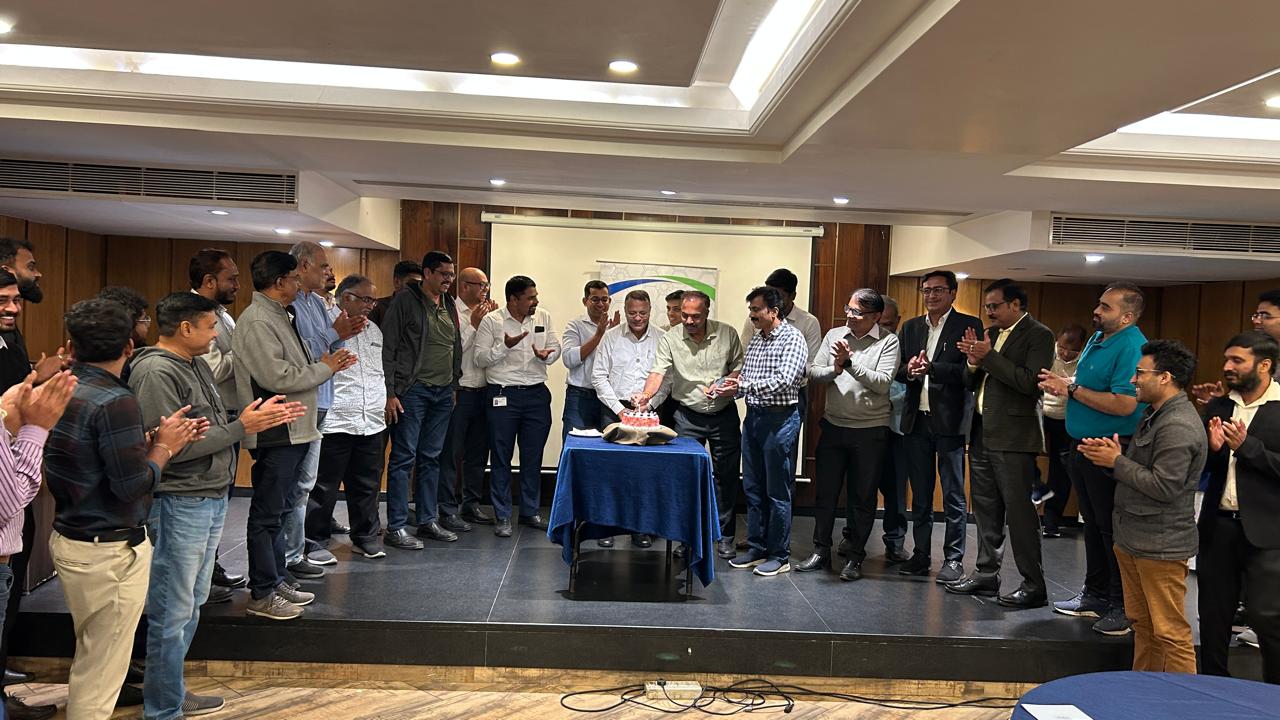
At the ISHRAE Day Celebration 2025, I had the opportunity to speak about a question I’ve encountered repeatedly across projects and geographies: Why do high-value projects still fail?
Failure Isn’t Random It’s Patterned
One of the first points I shared was this: project failure is rarely accidental. It follows patterns.
Across industries, we keep seeing the same symptoms late decisions, siloed teams, fragmented information, and costly corrections during execution. These issues don’t arise because people aren’t working hard. They happen because teams are often not aligned.
Capability alone doesn’t guarantee success. If talent and tools were enough, every project would succeed. But real-world delivery tells us otherwise.
The Real Problem Is Not Design Quality It’s Design Disconnect
In most projects, architecture, structures, and MEP systems are designed by capable teams. Each discipline does its job well. The problem begins when these disciplines work in isolation.
Architecture focuses on space and experience.
Structures focus on stability.
MEP focuses on systems and performance.
Individually, they perform. But when they don’t move together, misalignment creeps in. And this misalignment is often invisible until it becomes expensive.
Projects don’t usually “bleed” during design. They bleed during execution, when clashes are discovered on site, when changes trigger domino effects, and when corrections disrupt schedules and budgets.
Why Misalignment Costs More Than Mistakes
A key insight I wanted the audience to reflect on was this:
We don’t pay when the mistake is made we pay when it’s discovered.
By the time a design disconnect shows up on site, the cost is no longer just technical. It affects time, money, coordination, and trust. What could have been a small digital correction turns into a large physical problem.
A Needed Shift in How We Deliver Projects
The solution is not just better software or more drawings. It requires a shift in thinking.
Traditionally, projects follow a “draw–approve–fix” approach. Today, high-value projects need to think, simulate, coordinate, and then execute.
This is where integrated digital engineering plays a critical role. When architecture, structures, MEP, and digital delivery work as one system, projects become more predictable and resilient.
Integration Is the Real Advantage
During the session, I spoke about the four power pillars that must work together: Architecture, Structures, MEP, and Digital Delivery. No single discipline can deliver success alone integration does.
BIM and digital delivery act as the backbone of this integration. They turn design into data, enforce coordination, detect conflicts early, and connect design decisions directly to time, cost, and execution.
When teams share one source of truth, decisions become clearer, accountability improves, and assumptions are replaced with visibility.
Designing Together Is What Changes Outcomes
The biggest takeaway I hoped to leave with the audience was simple: the real value of digital engineering is not technology it’s predictability.
The question is no longer, “Can we design?”
It is, “Can we design together?”
Because when teams align early, integrate continuously, and collaborate through shared digital workflows, high-value projects stop reacting to problems and start preventing them.
I’m grateful to ISHRAE for providing a platform to share these insights and to everyone who engaged in the discussion. Conversations like these are essential if we want to move the industry from isolated excellence to collective success.